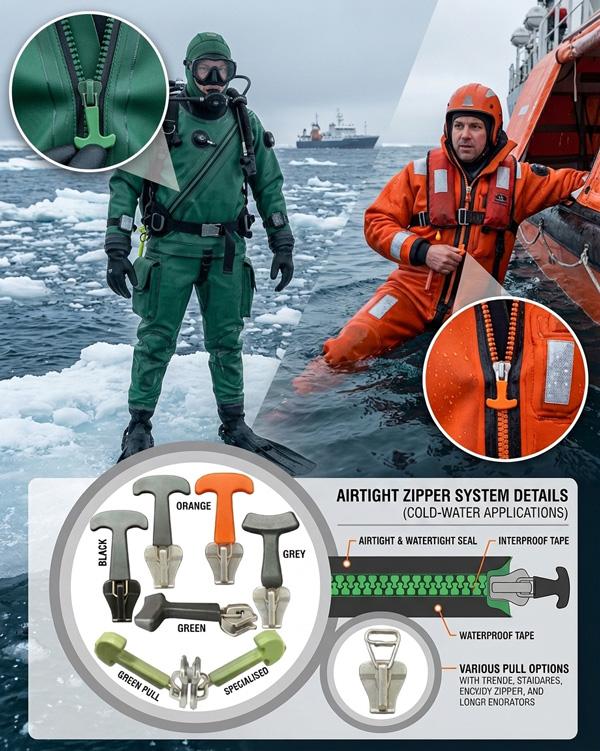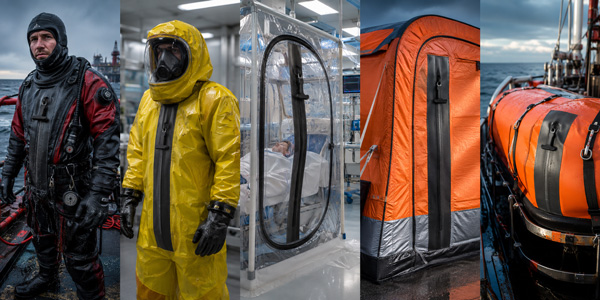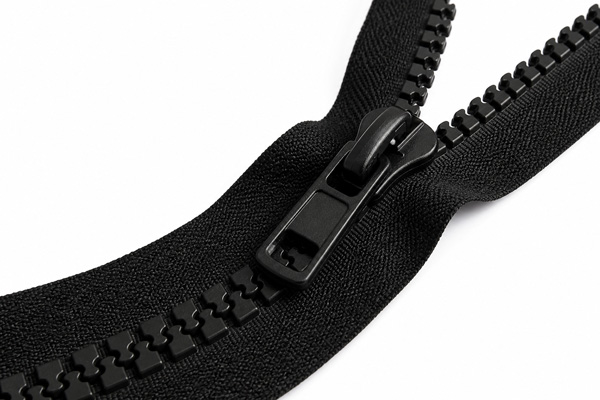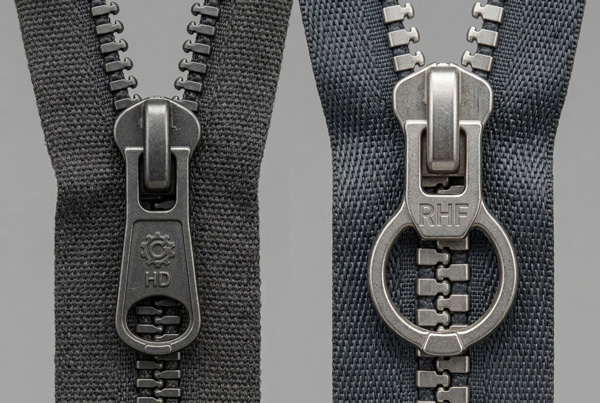
Boat-cover fabricators specify heavy-duty marine zippers because a closure must remain usable while exposed to fabric tension, wind movement, ultraviolet radiation, moisture, salt-laden air and repeated operation. A properly specified marine zipper helps keep the finished cover secure and serviceable while reducing premature failures, repair visits, warranty work and customer complaints.
- Environmental resistance: Marine closures must tolerate sunlight, moisture, salt and surface contamination.
- Mechanical reliability: Large, fitted canvas panels can place continuing crosswise stress on a zipper.
- System compatibility: The chain, slider, tape, stops, stitching and surrounding fabric must work together.
- Dependable operation: The zipper should remain practical to open and close under real installation conditions.
- Lower lifecycle risk: Avoiding one field repair may matter more than saving a small amount on the original closure.
For professional fabricators, a zipper is not simply a trim component. It is an operating part of the complete boat-cover system.
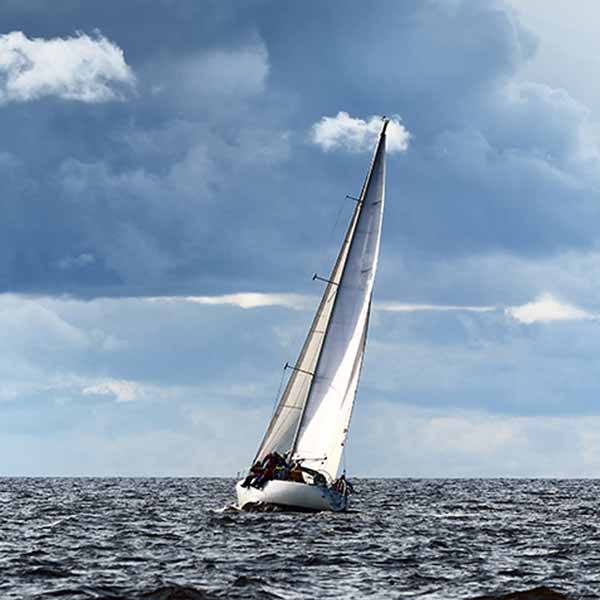
The Short Answer: Marine Covers Stress Every Part of a Zipper
A boat-cover zipper can face environmental exposure and mechanical stress at the same time, making the performance of the complete installed closure more important than the strength of its teeth alone.
A zipper used in a garment normally operates in a comparatively controlled setting. A zipper installed in a boat cover, cockpit enclosure or Bimini top may remain outdoors for extended periods while the surrounding material moves, stretches and contracts.
| Stress Factor | Component Affected | Possible Consequence |
|---|---|---|
| UV exposure | Tape, polymer components and stitching | Fading, brittleness or gradual strength loss |
| Salt and moisture | Sliders, stops and exposed hardware | Corrosion, deposits or restricted movement |
| Panel tension | Chain, tape, slider and seams | Separation, distortion or tearing |
| Wind movement | Installed closure and surrounding panels | Repeated or concentrated side loading |
| Dirt and dried salt | Teeth, coil and slider channel | Abrasion, increased operating force or jamming |
| Misalignment | Slider, chain and seam | Difficult closure and uneven load distribution |
These outcomes are not inevitable. Their likelihood depends on exposure, materials, zipper construction, cover design, installation quality and maintenance.
Boat Covers Create Continuous Mechanical Load
Large, closely fitted boat covers can place continuing tension across a zipper even when nobody is operating it.
A boat cover is normally patterned to remain secure, shed water and avoid excessive flapping. Those objectives create tension in the fabric. Some of that load can be transferred toward access openings, panel joints and zipper seams.
- Large canvas panels create sustained load. A zipper joining two substantial panels may experience crosswise force for as long as the cover remains installed.
- Tight fitting increases operating resistance. If the surrounding cover must be pulled into place, the user may try to close the zipper while the panels remain under tension.
- Wind creates changing loads. Wind uplift and repeated fabric movement can apply intermittent force rather than a single predictable static load.
- Curved seams change the load path. A zipper following a curve may experience different bending and side-loading conditions from one installed in a straight opening.
- Clear-vinyl panels introduce alignment demands. Clear enclosure material does not always behave like woven canvas, so poor alignment may concentrate stress near the closure.
- Seasonal installation affects handling. Covers removed and stored seasonally may be folded, pulled or reattached under changing temperature conditions.
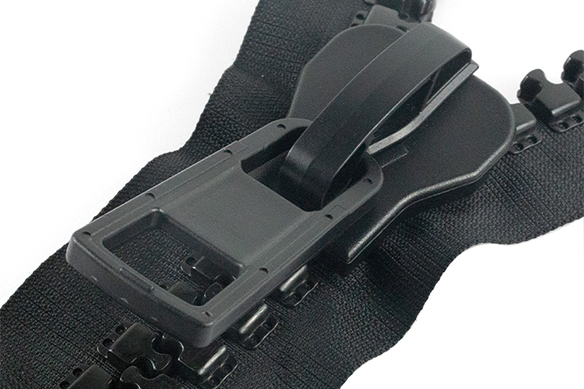
This is why “heavy-duty” should not mean only a visibly larger chain. The fabricator must consider how the zipper will interact with the cover pattern, seam, reinforcement and method of operation.
Readers needing a broader explanation of load, gauge and duty-cycle selection can refer to RHF Zipper’s complete heavy-duty industrial zipper buyer’s guide.
Marine Exposure Can Turn a Small Component Into a Failure Point
Marine exposure can gradually make a zipper harder to operate or less dependable if its materials and components are unsuitable for the environment.
Salt-Laden Air and Saltwater
Salt exposure can affect vulnerable metal components, including sliders, stops and pullers. Salt deposits may also accumulate around the chain and slider channel. Specifying noncorroding teeth alone does not eliminate this risk because every exposed component must be reviewed.
Ultraviolet Radiation
Continuous sunlight may affect zipper tape, stitching and polymer components over time. Performance depends on material formulation, color, exposure duration and whether the zipper is protected by a flap. A general “outdoor” label should not automatically be treated as evidence of suitability for every marine project.
Moisture and Humidity
A boat-cover zipper may remain damp after rain, washing, condensation or spray. Moisture can interact with salt, dirt and dissimilar components, affecting both material durability and operating smoothness.
Sand, Dirt and Dried Deposits
Particles trapped in or around the slider can increase friction and abrasion. Forcing a contaminated zipper may damage the chain, slider or adjoining seam.
Repeated Wet-and-Dry Cycles
Marine closures do not experience only one exposure event. Repeated wetting, drying, heating and cooling can make small compatibility or alignment problems more noticeable over time.
For a more detailed discussion of material exposure and maintenance, see RHF Zipper’s guide to preventing zipper corrosion in marine environments.
Fabricators Specify the Complete Zipper System, Not Just the Teeth
A dependable marine closure requires compatible chain, tape, slider, stops, stitching and installation—not simply corrosion-resistant teeth.
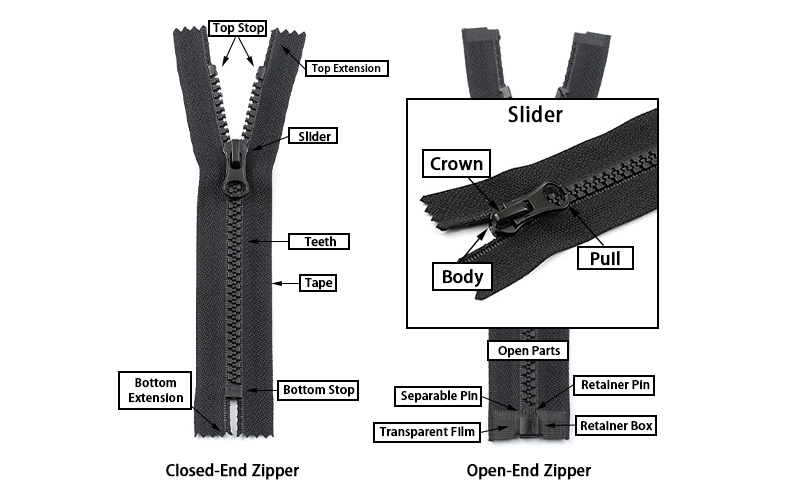
- Chain: The teeth or coil must provide suitable strength, flexibility and environmental compatibility.
- Tape: The tape transfers load from the chain into the seam and surrounding panel. If it is incompatible with the fabric or sewing method, it may become the weak point.
- Slider: The slider controls chain engagement. Its material, geometry and fit affect operating force and resistance to separation.
- Puller: The puller should be practical to grip in wet conditions and should not encourage excessive angled pulling.
- Stops: Top and bottom stops retain the slider and protect the ends of the operating chain.
- Stitching: Thread, seam spacing and stitch placement help determine whether load is distributed or concentrated.
- Reinforcement: Zipper ends and high-stress locations may require added structural support.
- Orientation: Horizontal, vertical, straight and curved installations can expose the zipper to different loads and contamination patterns.
A corrosion-resistant chain does not create a reliable marine closure if the slider, stops, tape or attachment seam becomes the first point of failure. Likewise, a strong zipper cannot compensate for a panel patterned with excessive tension.
Why Installation Matters as Much as Zipper Strength
Even a suitable heavy-duty marine zipper may perform poorly if the surrounding panels are misaligned or place excessive preload on the closure.
Straight Versus Curved Seams
Coil constructions may offer useful flexibility on curved openings, while some molded constructions provide more pronounced tooth engagement. Neither option is automatically correct for every boat cover. The bend radius, panel geometry, operating direction and required strength must be evaluated together.
Load Distribution
A seam should transfer load into the surrounding material rather than concentrate it at one short section of zipper tape. Reinforcement at ends and transition points may help manage concentrated forces.
Panel Alignment
Both zipper halves should meet without excessive pulling, twisting or offset. If users must drag one side into position before inserting or moving the slider, the installed system may already be overloaded.
Zipper-End Reinforcement
The ends of an opening often experience high local stress, especially where a user begins pulling or where the fabric direction changes. Reinforcement should be designed as part of the cover rather than added only after a failure appears.
Practical Operating Clearance
A cover may fit neatly and still be difficult to use. Fabricators should consider whether the customer can release nearby fasteners, reduce tension and operate the slider without forcing it.
These decisions explain why sample evaluation should take place in the actual canvas, clear-vinyl panel or enclosure construction. Testing a loose zipper on a workbench does not reproduce the behavior of an installed assembly.
What Fabricators Risk When a Zipper Is Underspecified
An underspecified zipper can turn a relatively small component problem into an expensive field-service issue.
| Closure Problem | Possible Project Consequence |
|---|---|
| Chain separates under panel tension | The cover cannot remain securely closed |
| Slider becomes difficult to move | The customer forces the closure or stops using the panel |
| Slider or stops corrode | The access opening becomes difficult or unusable |
| Tape tears beside the chain | Replacement may require extensive resewing |
| Zipper end pulls away from the panel | Local reinforcement and repair may be necessary |
| Closure repeatedly jams | Complaints, return visits and loss of customer confidence |
A replacement zipper may cost relatively little compared with the labor required to remove an installed closure, open finished seams, fit new components and resew a large enclosure panel.
If the repair must be completed at a marina or on the customer’s boat, travel and scheduling can add further cost. The fabricator may also have to perform the work during a busy season when production capacity is already limited.
Heavy-Duty Marine Zippers Are a Lifecycle Decision
Fabricators specify heavy-duty marine zippers to control the total cost and risk of a cover over its service life, not merely to maximize the initial component specification.
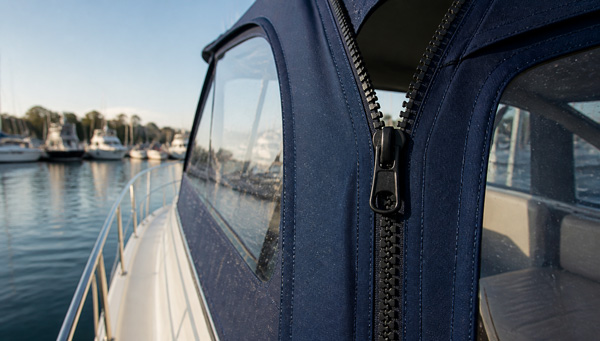
- Installed labor: A dependable closure protects the time already invested in patterning, cutting and sewing.
- Return visits: Fewer avoidable closure problems mean less unpaid field service.
- Warranty exposure: A component selected for the real application reduces the risk of premature claims.
- Replacement difficulty: Zippers sewn into large or complex panels can be labor-intensive to replace.
- Customer experience: Smooth, predictable operation affects how the owner judges the entire cover.
- Project positioning: Reliable hardware supports premium custom work more effectively than a closure selected mainly by unit price.
- Shop reputation: Customers usually associate a failed zipper with the fabricator who supplied the cover.
“Heavy-duty” does not automatically mean choosing the largest or most expensive zipper available. Overspecifying may introduce unnecessary stiffness, bulk or operating force. The objective is to match the complete closure to the installed load, exposure and access requirements.
For a broader step-by-step selection process, read how to choose a heavy-duty zipper. For comparisons across tents, bags, covers and other outdoor products, see these heavy-duty zipper options for outdoor gear.
A Fabricator’s Pre-Production Validation Checklist
A boat-cover fabricator should validate the proposed zipper in the actual panel construction before approving bulk production.
- What type of cover or enclosure is being manufactured?
- Will it be used in saltwater, freshwater or mixed conditions?
- Where will the zipper be installed?
- Is the opening straight or curved?
- Will the zipper carry sustained panel tension?
- Is it sewn into canvas, coated fabric or clear vinyl?
- How frequently will the opening be used?
- Is one-way, two-way or separating operation required?
- What finished length and tolerance are needed?
- Which chain, slider, puller and stop materials are proposed?
- Will a flap protect the zipper from direct exposure?
- Can the sample be tested after sewing into the intended material?
The purpose is not to find one universal “best marine zipper.” It is to confirm that the proposed construction works in the customer’s actual cover.
How RHF Zipper Supports Marine-Cover Projects
RHF Zipper supports B2B customers by reviewing the application and discussing a zipper configuration suited to the project’s construction and operating environment.
With 18 years of zipper and fastening experience and a manufacturing base of more than 20,000 square meters in Guangdong, RHF Zipper works with international buyers on custom zipper and puller projects.
Depending on the application, project discussions may include:
- Chain type and nominal size
- Tape material, width and color
- Slider and puller configuration
- Finished zipper length
- Open-end, closed-end or two-way construction
- Continuous-chain requirements
- Stops and other components
- Packaging and labeling
- Sample development
- Required test reports or supporting documentation
Final performance should be confirmed for the exact zipper construction and installed assembly. Terms such as “marine,” “heavy-duty” and “water-resistant” should always be connected to defined project requirements rather than treated as universal performance guarantees.
Conclusion
Boat-cover fabricators specify heavy-duty marine zippers because the closure must remain usable under combined environmental exposure, panel tension and repeated operation. The right zipper system can reduce premature failures, protect the value of the completed cover and lower the fabricator’s exposure to repairs, warranty work and dissatisfied customers.
The chain, tape, slider, stops, stitching, reinforcement and surrounding panels should be evaluated as one installed system. A production-intent sample should then be tested in the actual fabric and opening design.
Developing a boat cover, Bimini top or marine enclosure? Send RHF Zipper your cover application, panel material, zipper location, finished length, opening configuration, water environment, estimated quantity and required documentation. Our team can review the project and discuss an appropriate sample configuration.
Frequently Asked Questions
Why Do Boat Covers Need Heavy-Duty Marine Zippers?
Boat covers may place sustained fabric tension and changing wind loads on their closures while also exposing them to sunlight, moisture, salt and contamination. A heavy-duty marine zipper is specified to manage this combination more reliably. The appropriate construction still depends on the cover design, installation method, operating frequency and exposure environment.
What Causes Boat-Cover Zippers to Fail?
Boat-cover zipper failures may result from corrosion, UV-related material degradation, contamination, slider wear, panel misalignment, excessive side load, weak attachment seams or an unsuitable zipper specification. Several causes may operate together, so the complete installed closure should be inspected instead of assuming that the teeth alone caused the problem.
Are Molded Plastic Zippers Suitable for Saltwater Boat Covers?
Molded plastic teeth can be a useful starting point for saltwater applications because the teeth themselves do not rust. However, suitability depends on the complete assembly, including the slider, stops, tape, stitching and UV performance. A plastic chain combined with vulnerable metal components should not automatically be described as corrosion-proof.
Can a Heavy-Duty Zipper Prevent Water From Entering a Boat Cover?
No. Heavy-duty construction does not automatically make a zipper waterproof or watertight. Water control depends on the zipper design, tape treatment, protective flaps, seam construction, installation direction and test conditions. Buyers should define the required level of water resistance and request evidence for the exact finished construction.
Why Does Fabric Tension Affect Zipper Performance?
Fabric tension creates crosswise and angled forces that can make the slider difficult to move and increase stress on the chain, tape and seams. Users should not have to force a zipper to pull misaligned panels together. Correct patterning, reinforcement and installation help the cover carry load without concentrating it at the closure.
Are Larger Zipper Gauges Always Better for Marine Covers?
No. A larger gauge may offer greater strength in some constructions, but it can also add stiffness, bulk and operating resistance. The fabricator should choose a size that matches the panel load, curve, seam design and user requirements. Actual product data and installed-sample testing are more useful than gauge alone.
Should the Slider and Stops Also Be Corrosion-Resistant?
Yes. The slider and stops should be evaluated for the same marine exposure as the zipper chain. A noncorroding chain cannot deliver dependable operation if the slider seizes or the stops deteriorate. Material compatibility and maintenance requirements should be confirmed for every exposed part of the closure.
What Should a Boat-Cover Fabricator Provide When Requesting Samples?
The fabricator should provide the cover type, base material, zipper location, straight or curved installation, finished length, opening style, expected tension, operating frequency, saltwater or freshwater exposure and estimated volume. Supplying these details helps the manufacturer prepare a sample closer to the intended production assembly.