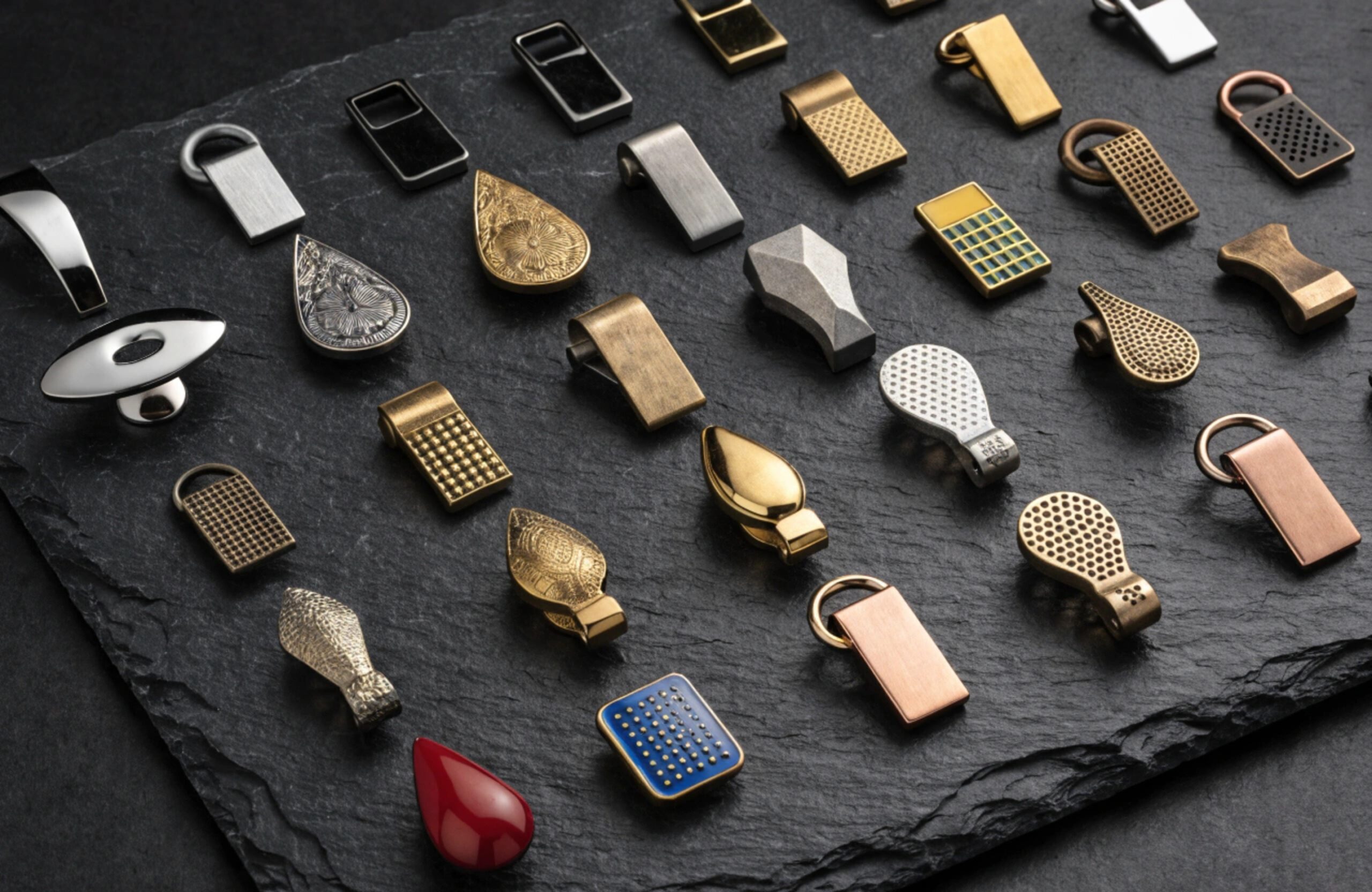
Struggling to find a custom zipper puller that lasts? The wrong choice can ruin your product's feel and fail quickly. Let's explore the best options for your brand.
For most custom zipper pullers, choose zinc alloy for its high versatility and cost-effectiveness. For extreme durability, luxury feel, or specialized uses like outdoor gear, stainless steel or brass are the premium choices. Your budget and product needs will ultimately guide the final decision.
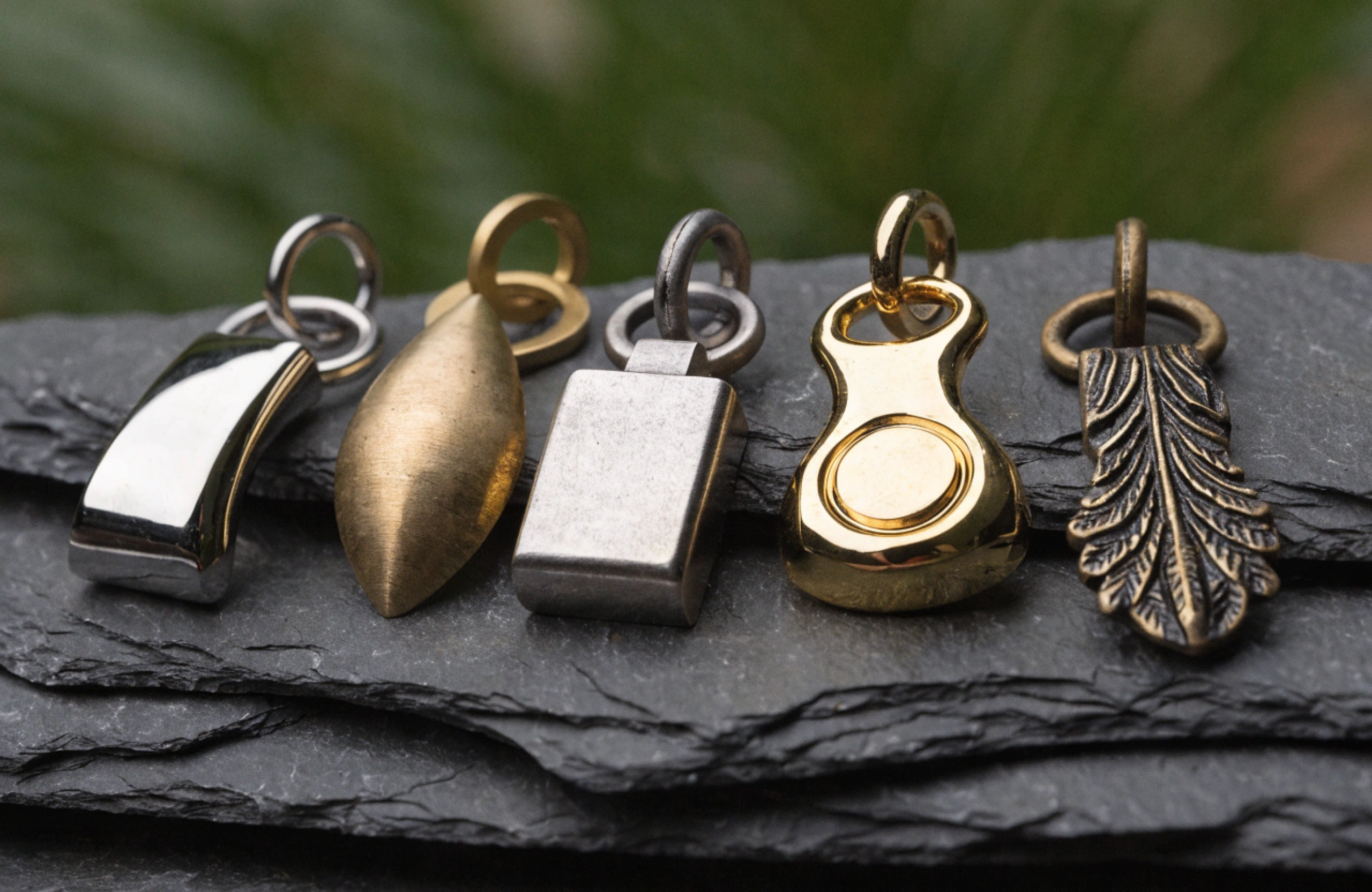
In my 18 years in the zipper business, I've seen many clients focus first on the look of a custom puller. They want a unique shape or a specific color. But for mid-to-high-end brands, the real concerns are durability and how long that color will last. A great design is useless if the puller breaks or the finish peels off after a few months. The key to getting it right is to first be clear about your design idea, your product's market position, and your budget. The budget often sets the limit for the quality and performance you can expect. This is a simple truth in the custom manufacturing world.
Let's break down the options so you can make an informed choice.
Why is Zinc Alloy the Go-To for Most Custom Pullers?
Need a unique puller design without a massive budget? Zinc alloy offers incredible design freedom. But you might wonder if it's durable enough for your product.
Zinc alloy is the top choice for custom pullers because it is highly malleable through die-casting, allowing for complex shapes and logos.1 It plates well for various finishes and offers an excellent balance of quality, appearance, and cost for mass production, suiting most apparel and bags.
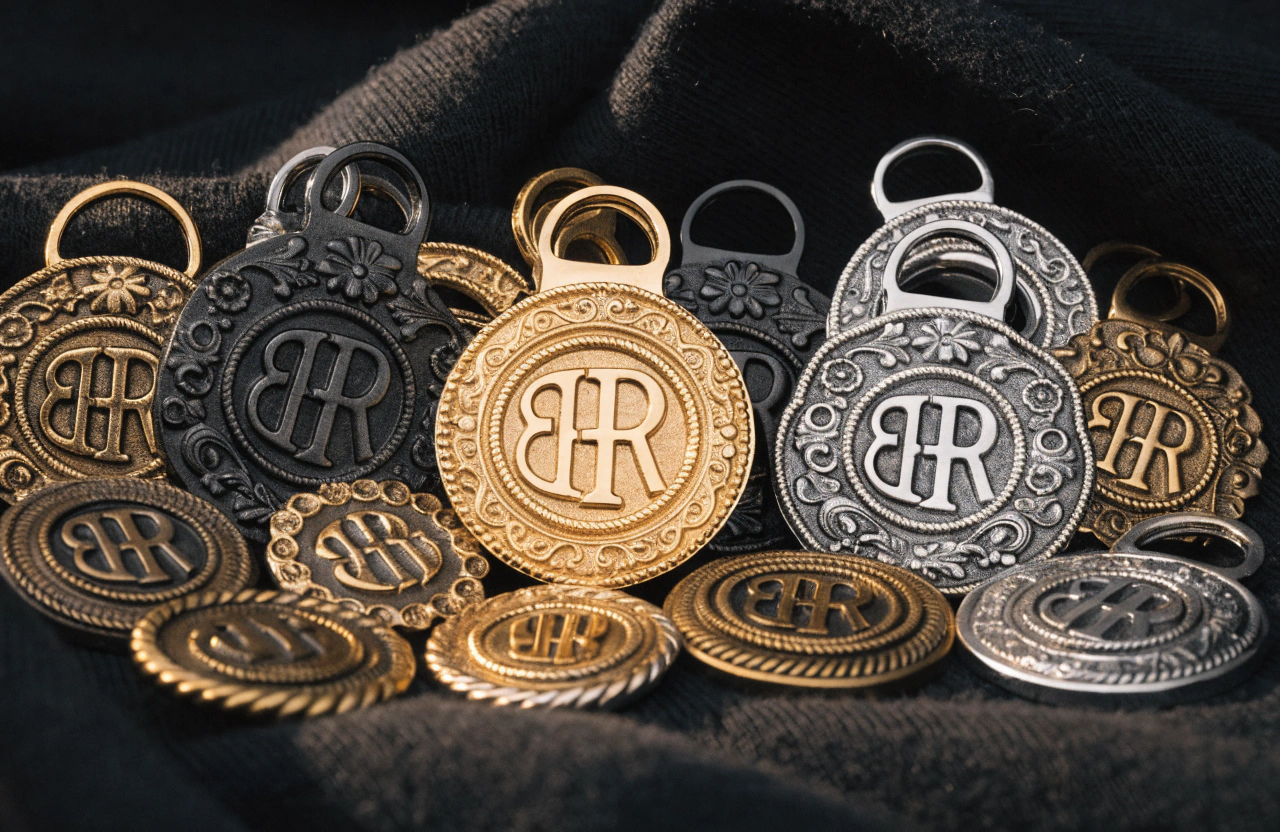
Zinc alloy is the mainstream material for custom zipper pullers today, and for good reason. Its greatest strength is its versatility. Using a process called die-casting, we can create almost any shape you can imagine.2 This includes complex patterns, curved engravings, unusual outlines, and vintage styles. The design freedom is extremely high.
It also works very well with surface plating. We can easily achieve finishes like antique brass, brushed metal, shiny chrome, matte black, or antique silver. The plating sticks strongly to the surface, creating a fine texture that doesn't easily peel or fade. This gives the puller a high-end, decorative feel.
From a production standpoint, zinc alloy has big advantages. Die-casting is an efficient process, so for large orders, the cost per unit is very manageable.3 It offers outstanding value. After a quality plating process, the puller resists moisture and oxidation, so it won't easily rust. This makes it a reliable choice for the vast majority of clothing and bag applications.
| Feature | Benefit of Zinc Alloy |
|---|---|
| Malleability | Allows for highly detailed and complex custom shapes. |
| Plating | Accepts a wide variety of finishes for any aesthetic. |
| Cost | Very cost-effective for medium to large production runs. |
| Durability | Good corrosion resistance for everyday use when plated. |
When Should You Invest in Stainless Steel or Brass Pullers?
Worried about your pullers corroding, breaking, or fading over time? High-performance products demand high-performance materials. Is the extra cost of stainless steel or brass worth it?
Choose stainless steel or brass for products that require ultimate durability and a luxury feel.4 These materials are ideal for outdoor gear, military equipment, luxury goods, and medical applications where resistance to corrosion, scratches, and extreme conditions is non-negotiable.5
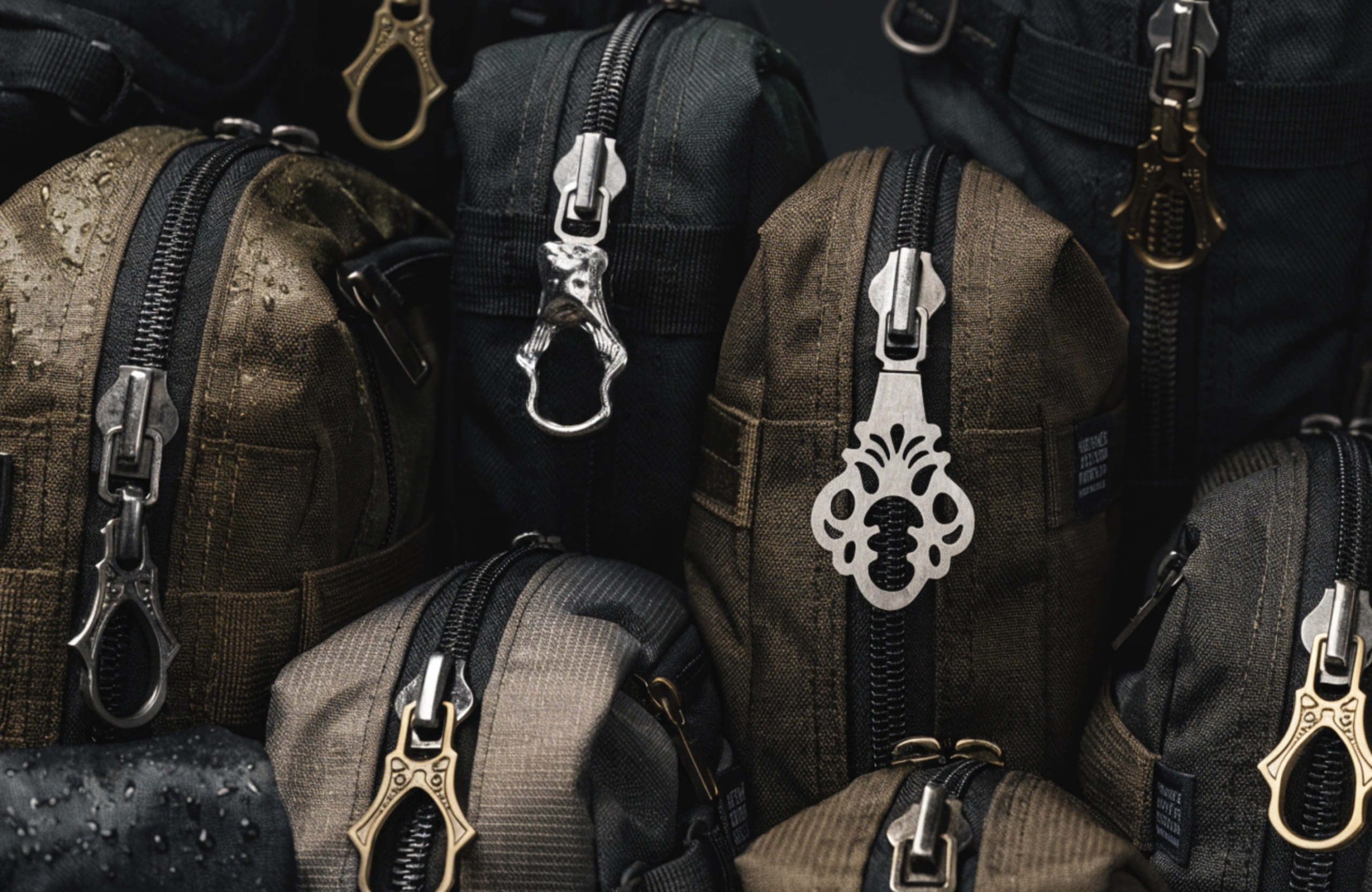
If you have a higher budget and are looking for top-tier luxury and performance, you should consider stainless steel or brass. These materials are naturally hard and tough. They hold up incredibly well during the high-temperature plating process, which means the finish bonds better and lasts longer. In daily use, they resist bending, breaking, and corrosion.
Stainless steel pullers are often made using Metal Injection Molding (MIM).6 This process involves mixing metal powder with a binder, injection molding it, and then heating it to 1300°C. It's a long process that uses a lot of energy, and the molds and raw materials are expensive. A single stainless steel puller can cost 3 to 5 times more than a zinc alloy one. This makes it better suited for high-end, niche products.
Here are the specific situations where I always recommend stainless steel:
1. High-End Outdoor and Military Gear
These products need to withstand saltwater, chemicals, and extreme temperatures.7 In these conditions, zinc alloy can oxidize and break. Stainless steel can handle harsh environments for a long time.
2. Luxury Goods and Accessories
These items must look perfect for years. They need to resist scratches and cannot have the finish peel or fade. Standard zinc alloy plating can wear off over time. Stainless steel, either in its natural state or with a special PVD coating, maintains its appearance.
3. Medical or Food-Grade Products
These applications have strict rules about being lead-free, nickel-free, and non-toxic. Zinc alloy can sometimes contain traces of lead or cadmium. 304 or 316 stainless steel meets these strict health and safety standards.8
4. Complex 3D Shapes
For designs with thin walls, hollow parts, or 3D reliefs, zinc alloy die-casting may not be strong enough. Only the stainless steel MIM process can create these complex shapes while maintaining structural integrity.9
5. High-Strength and Load-Bearing Equipment
Luggage, workwear, and tactical gear need pullers that won't bend or snap under pressure. Zinc alloy can be brittle. Stainless steel is much tougher and stronger. At our factory, we have already developed a full range of #3, #5, and #8 stainless steel non-lock sliders and can create custom pull tabs to match. We have perfected the PVD plating process for stainless steel, giving our clients more high-performance options than many other suppliers can offer.
How Do Finishes and Shapes Define Your Brand's Identity?
Does your zipper puller just close a bag, or does it tell a story? The shape and finish are your brand's first touchpoint. Let's make sure it is saying the right thing.
Finishes like PVD, electroplating, or enamel add color and texture, defining your product's aesthetic from rugged to refined.10 The shape, from a simple tab to a complex 3D logo, provides a unique tactile experience and reinforces your brand identity with every use.
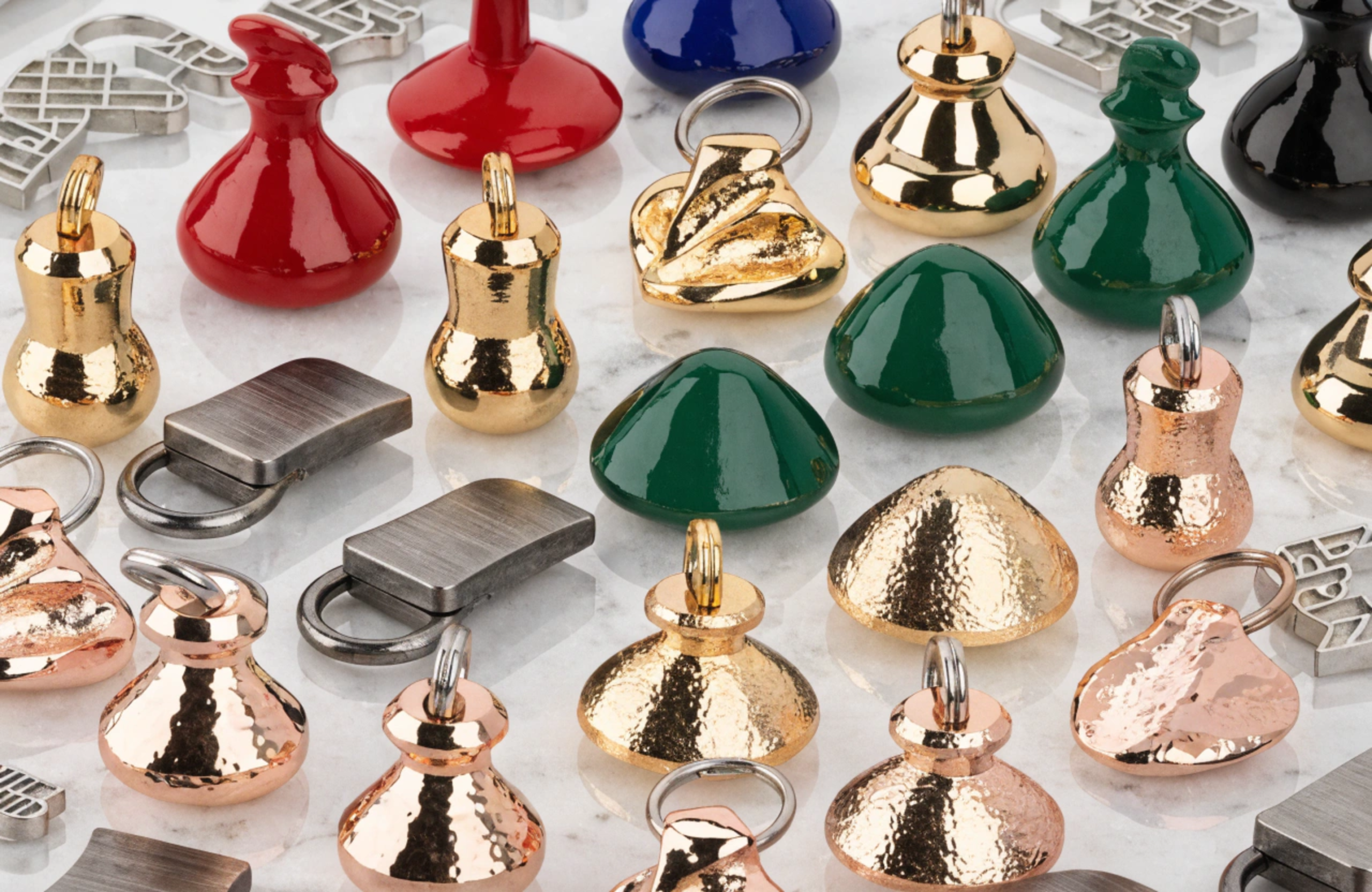
The material is the foundation, but the shape and finish are what your customers see and touch. These details can turn a simple component into a powerful branding tool. They communicate the quality and personality of your product before the customer even uses it.
The finish does more than just add color. It also adds a layer of protection and changes the texture. A shiny, polished finish can feel luxurious, while a matte or brushed finish can feel modern and understated.11
Here’s a quick look at common finishing options:
| Finish Type | Description | Best For |
|---|---|---|
| Electroplating | A thin layer of metal is deposited onto the base metal. | Achieving classic metallic looks (gold, silver, nickel). |
| PVD Coating | A durable, thin film is applied in a vacuum. | High-wear items, vibrant colors, stainless steel. |
| Painting/Enamel | Liquid coating is applied and cured for a smooth finish. | Adding specific, non-metallic brand colors. |
The shape of the puller is just as important. A generic tab does the job, but a custom shape makes your product memorable. We can create pullers shaped like your company logo, a unique symbol, or any other form that connects to your brand story. This physical interaction reinforces brand recognition every time the product is opened or closed. I once worked with an outdoor brand that used a puller shaped like a small carabiner. It was a small detail, but it perfectly captured their adventurous spirit and their customers loved it. It’s these thoughtful touches that elevate a product from good to great.
Conclusion
Choosing the right custom puller comes down to matching your material, shape, and finish to your product's needs and budget. This ensures both lasting performance and strong brand consistency.
"Design biodegradable Zn alloys: Second phases and their ... - PMC", https://pmc.ncbi.nlm.nih.gov/articles/PMC7036742/. Zinc alloy's malleability and suitability for die-casting are widely recognized in manufacturing literature, supporting its use for intricate designs. Evidence role: mechanism; source type: education. Supports: Zinc alloy is highly malleable through die-casting, allowing for complex shapes and logos.. ↩
"Multi-Slide Die Casting Process for Complex Components - Dynacast", https://www.dynacast.com/resources/video/multi-slide-die-casting-process-dynacast-die-casting. Die-casting is a well-established manufacturing process for creating complex shapes, as documented in industrial engineering resources. Evidence role: mechanism; source type: education. Supports: Die-casting allows for the creation of complex shapes in manufacturing.. Scope note: The complexity achievable may depend on the specific alloy and equipment used. ↩
"Cost-Effective Solutions: When to Use Die Casting Over Other ...", https://cwmdiecast.com/cost-effective-solutions/. Die-casting is recognized for its efficiency and cost-effectiveness in large-scale manufacturing. Evidence role: mechanism; source type: education. Supports: Die-casting is efficient and cost-effective for large orders.. Scope note: Cost efficiency may vary depending on order size and material used. ↩
"Brass vs. Stainless Steel: Which Is Best for My Project?", https://polishedmetals.com/brass-vs-stainless-steel/. Stainless steel and brass are commonly cited in engineering and materials science for their durability and aesthetic qualities, making them suitable for high-performance applications. Evidence role: expert_consensus; source type: research. Supports: Stainless steel and brass are ideal for products requiring durability and luxury feel.. Scope note: The suitability of these materials may vary depending on specific product requirements. ↩
"Stainless steel - Wikipedia", https://en.wikipedia.org/wiki/Stainless_steel. Corrosion resistance and durability of stainless steel and brass are documented in materials science, supporting their use in demanding applications. Evidence role: mechanism; source type: institution. Supports: Stainless steel and brass are suitable for applications requiring resistance to corrosion, scratches, and extreme conditions.. Scope note: Specific performance data for outdoor gear or medical applications may vary. ↩
"Metal injection molding - Wikipedia", https://en.wikipedia.org/wiki/Metal_injection_molding. Metal Injection Molding (MIM) is a documented process for manufacturing stainless steel components, supporting its use for pullers. Evidence role: mechanism; source type: research. Supports: Metal Injection Molding is used to manufacture stainless steel pullers.. Scope note: The cost and energy intensity of MIM may limit its application to high-end products. ↩
"Marine grade stainless - Wikipedia", https://en.wikipedia.org/wiki/Marine_grade_stainless. Stainless steel's resistance to saltwater, chemicals, and extreme temperatures is supported by materials science research. Evidence role: mechanism; source type: research. Supports: Stainless steel products can withstand saltwater, chemicals, and extreme temperatures.. Scope note: Performance may vary depending on the specific grade of stainless steel used. ↩
"SAE 304 stainless steel - Wikipedia", https://en.wikipedia.org/wiki/SAE_304_stainless_steel. 304 and 316 stainless steel are widely recognized for meeting health and safety standards, including being lead-free and nickel-free. Evidence role: expert_consensus; source type: government. Supports: 304 and 316 stainless steel meet strict health and safety standards.. Scope note: Standards may vary by region or specific application requirements. ↩
"Process Overview: MIM - Metal Injection Molding Association", https://www.mimaweb.org/DesignCenter/ProcessOverviewMIM.aspx. The MIM process is documented for its ability to produce complex shapes with high structural integrity, particularly in stainless steel. Evidence role: mechanism; source type: research. Supports: Stainless steel MIM process can create complex shapes with structural integrity.. Scope note: The complexity achievable may depend on the specific design and material composition. ↩
"Electroplating - Wikipedia", https://en.wikipedia.org/wiki/Electroplating. PVD, electroplating, and enamel finishes are documented for their aesthetic and protective qualities in manufacturing. Evidence role: mechanism; source type: education. Supports: PVD, electroplating, and enamel finishes add color and texture to products.. Scope note: The durability of these finishes may vary depending on the application and material. ↩
"Matte Finish Gift Boxes and Luxury Perception - IJEN", https://ijen.com/texture-matters-how-matte-finishes-influence-consumer-perception-of-luxury/. The aesthetic impact of polished, matte, and brushed finishes is supported by design and materials science literature. Evidence role: expert_consensus; source type: education. Supports: Polished finishes feel luxurious, while matte or brushed finishes feel modern and understated.. Scope note: Perception of finishes may vary by cultural or individual preferences. ↩