Custom Metal Zipper Puller with Logo: Design, Plating, and Ordering Guide for Fashion and Outdoor Brands?
A custom metal zipper puller with logo can make a jacket, handbag, backpack, or outdoor gear line feel more premium. However, a weak design, poor plating, or rushed mold can create breakage, color fading, and late production. I have seen these problems often, so I wrote this guide to help buyers order with fewer risks.
A custom metal zipper puller with logo should be designed around material, structure, logo process, plating method, and final application. Zinc alloy is the most common choice, while stainless steel or brass can fit special projects. The best results come from engineering review before mold opening, not from copying a logo into a mold too quickly.
As a factory owner in Shenzhen with 18 years in zipper manufacturing, I look at pullers differently from a catalog seller. I care about mold flow, hanging hole strength, plating adhesion, and whether the buyer can repeat the same quality in bulk production.
Which Custom Metal Zipper Puller with Logo Style Fits Your Product?
Many brands start with a logo file and ask for a price. That feels efficient, but it often skips the most important question. The correct custom puller style depends on the garment, bag, user hand feel, target price, and durability requirement.
The three main styles are metal tags, metal pullers with cord, and full metal pullers. Metal tags work well for fashion branding. Metal pullers with cord fit outdoor and luggage applications. Full metal pullers give the strongest premium feeling for jackets, handbags, and high-end accessories.
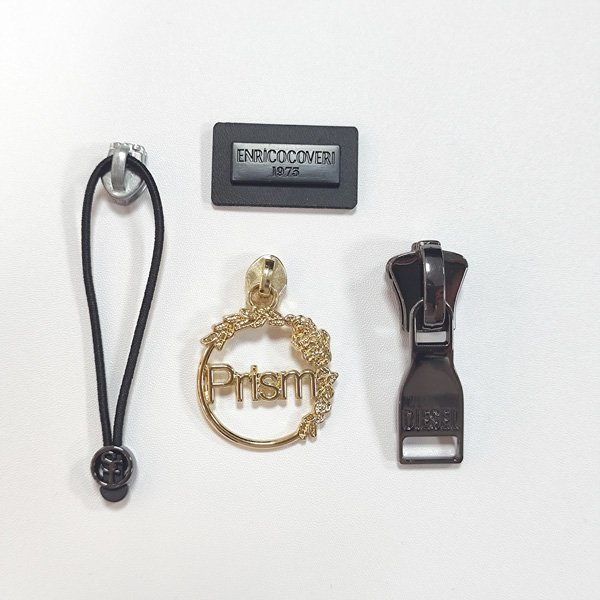
The style should follow the product application
I usually ask buyers where the puller will be used before I discuss shape. A handbag zipper puller does not face the same stress as a ski jacket puller. A luggage puller may be pulled hard many times each day. A children’s jacket may need a lighter, smoother shape with fewer sharp edges.
| Puller Type | Best Use | Main Advantage | Buyer Note |
|---|---|---|---|
| Metal tag | Fashion apparel, handbags, accessories | Clean logo display | Check edge comfort and weight |
| Metal puller with cord | Outdoor wear, backpacks, luggage | Easy grip with gloves | Confirm cord material and color fastness |
| Full metal puller | Premium jackets, bags, leather goods | Strong brand impression | Balance thickness, weight, and cost |
Zinc alloy is usually my first recommendation for a custom metal zipper puller with logo. It has strong die-casting performance, supports complex shapes, holds debossed or embossed logo details well, and offers good cost control for OEM and ODM orders. Stainless steel can be useful when the buyer wants a harder, corrosion-resistant feeling, but it is less flexible for deep 3D logo shapes. Brass can create a premium classic appearance, but it usually increases material cost.
The practical advice is simple. If your project needs reliable branding, stable bulk output, and reasonable mold cost, zinc alloy is the safest starting point. If your product has special chemical exposure, extreme strength requirements, or a very specific luxury metal story, then stainless steel or brass may be worth reviewing. I prefer to make that decision after seeing the zipper size, fabric type, and final retail application.
How Thick Should a Custom Metal Zipper Puller with Logo Be?
Design teams sometimes ask for a very thin puller because it looks modern on screen. That request can create a hidden failure point. A zipper puller is not only a decoration. It is a small mechanical part that receives repeated force.
For durable metal zipper pullers, the hanging hole area should usually stay around 1.4 mm to 1.6 mm thick, and the main puller body should stay above 2.0 mm. These numbers help protect the stress point, reduce fracture risk, and improve long-term performance.
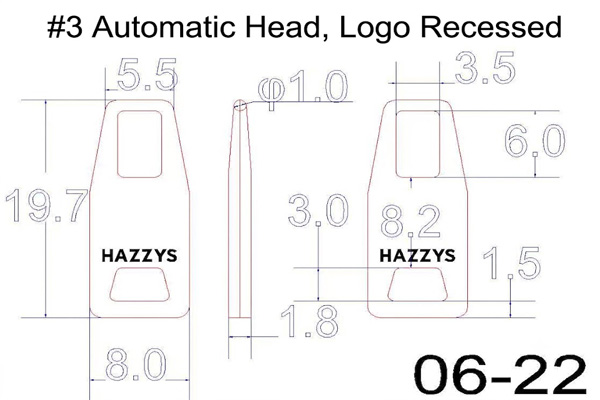
Thin design can increase breakage risk
In my factory, the first place I check is the hanging hole. That small hole carries most of the pulling force. If the wall is too thin, the part may look elegant in a photo but fail during real use. This problem becomes more serious on luggage, boots, heavy jackets, and outdoor bags.
A good puller needs enough metal around the hole, enough body thickness, and enough radius on the corners. Sharp corners may look crisp, but they concentrate stress. A small radius often improves strength without changing the brand look. This is one reason a factory engineering review matters before mold opening.
- Keep the hanging hole wall around 1.4 mm to 1.6 mm when the design allows it.
- Keep the main body thickness above 2.0 mm for better durability.
- Avoid very narrow bridges between logo cutouts and the puller edge.
- Use rounded internal corners when the shape permits it.
The best product design teams understand this trade-off. They do not ask the factory to make every part thinner. They ask which areas can be slim and which areas must stay strong. This mindset usually saves money later because the first sample is closer to production reality.
If you already have a sketch, I recommend sending the logo, expected length, zipper size, product category, and target plating color together. My engineering team can then identify weak points before the mold cost is spent. That review is especially important for brands that plan seasonal repeat orders.
Which Logo Process Works Best on Metal Zipper Pullers?
A logo can look excellent in Adobe Illustrator and still look weak on metal. The problem is scale, depth, edge angle, and surface finishing. A good logo process protects brand recognition while keeping mold and production practical.
The most common logo processes are debossed, embossed, paint filled, and laser engraved. Debossed logos are durable and widely used. Embossed logos create stronger dimension. Paint fill shows brand colors. Laser engraving is fast and low-cost for small runs or test orders.
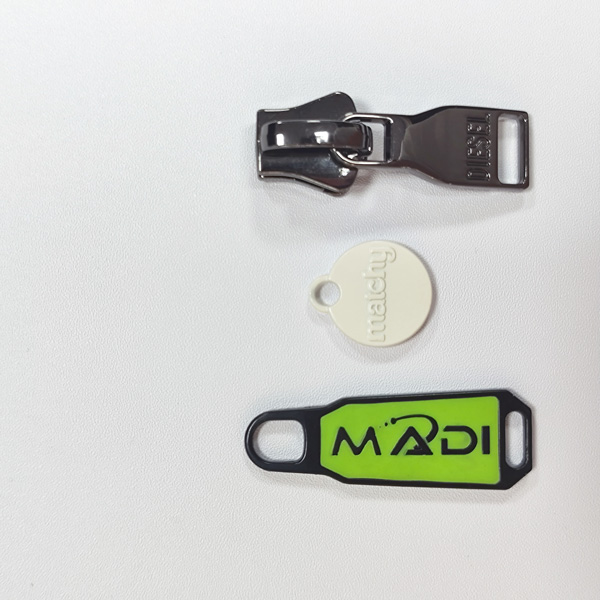
Logo technique should match order size and brand positioning
Debossed logos are the workhorse of the industry. The logo is pressed or formed inward, which gives a clean 3D effect and good abrasion resistance. I often recommend this option for mass-market apparel, backpacks, and accessories because it balances appearance, durability, and cost.
Embossed logos stand above the surface. This process gives stronger brand recognition and a more sculpted look. Many fashion brands like it because the logo catches light from different angles. The mold design must be reviewed carefully, because very thin raised lines may not cast cleanly in bulk production.
| Logo Process | Best For | Cost Level | Factory Advice |
|---|---|---|---|
| Debossed | Most brands and repeat orders | Medium | Reliable and durable |
| Embossed | Premium fashion branding | Medium to high | Avoid extremely thin raised lines |
| Paint filled | Brand color or multi-color logo | Medium to high | Confirm color tolerance before bulk |
| Laser engraving | Small batch, trial market, fast sample | Low | Good for testing, less ideal for long-term premium programs |
Paint-filled logos are useful when a brand must show a standard color, such as a red icon, blue lettering, or two-tone mark. This process requires more control because paint adhesion, color consistency, and drying time all affect the final result. When the logo is tiny, too many colors can reduce clarity.
Laser engraving has one honest advantage: it avoids mold cost for the logo. It is a smart choice when a brand wants 300 pieces for market testing or needs a fast prototype in 3 to 5 days. However, for larger or long-term orders, I usually recommend opening a proper mold. Molded logos normally look more stable, more dimensional, and more premium in repeat production.
Composite processes, such as combining metal with injection-molded rubber or plastic details, can create a distinctive outdoor look. They also add mold steps, alignment challenges, and cost. I do not reject these designs, but I always ask the buyer to confirm the target price first. A beautiful sample must still make sense in the final bill of materials.
What Plating and Surface Finish Should You Choose for a Custom Metal Zipper Puller with Logo?
Plating is where many purchasing problems appear. A puller may look good in the first sample, but poor surface treatment can fade, scratch, or corrode after shipment. Buyers need to understand the difference between beautiful showroom color and stable production color.
Rack plating or rack spraying gives better appearance and consistency for brand goods, while barrel processes offer efficiency and cost advantages for large-volume items. For black finishes, electrophoresis is often the best choice because it creates a smooth, even bright black or matte black surface.
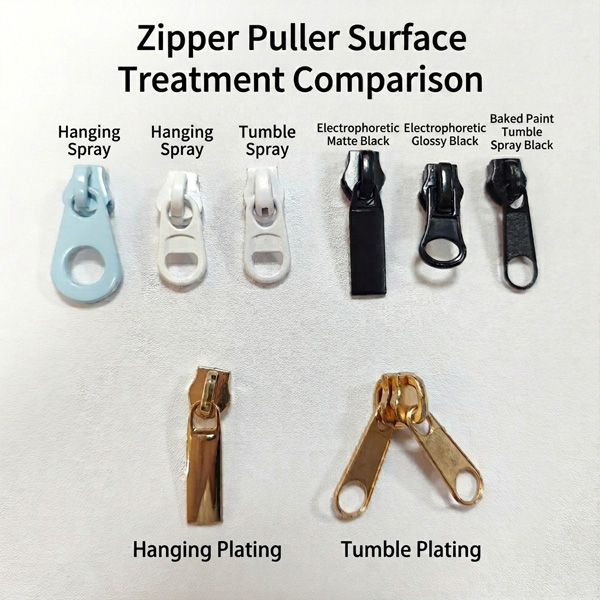
Surface treatment should match quality level and environment
For gold, silver, gunmetal, antique brass, and other metallic tones, rack plating usually gives a more refined result. Each piece is held separately, so the surface receives more even treatment. This method is suitable for premium jackets, handbags, and branded retail products where the puller is part of the visual identity.
Barrel plating or barrel spraying can be useful for large-volume production with cost pressure. The parts are processed in bulk, so efficiency improves. The trade-off is that small contact marks and slightly less uniform surface appearance may occur. This may be acceptable for hidden or lower-cost applications, but it may not satisfy a premium fashion buyer.
- Rack spraying: Better color consistency and surface appearance for colored finishes.
- Barrel spraying: Better cost efficiency for large-volume, price-sensitive orders.
- Rack plating: More premium metal tone and stronger visual consistency.
- Electrophoresis: Recommended for bright black and matte black finishes.
Outdoor products need another level of discussion. If the puller will be used near the ocean, in high humidity, or under extreme weather, the factory should consider anti-acid treatment and stronger corrosion-control steps. I prefer to discuss these conditions early because plating failures are expensive after the goods enter the market.
There is one truth that I tell outdoor buyers directly. In some extreme environments, a plastic zipper puller may be a better technical choice than a metal one. Metal can be made stronger and more resistant, but it still has limits. A responsible factory should not push metal when the application clearly calls for plastic or another material.
Compliance also matters for overseas buyers. At RHF Zipper, we work with export requirements and testing expectations such as OEKO-TEX Standard 100, REACH, RoHS, CA65, GRS, BSCI, and ISO 9001 quality management. These standards help reduce purchasing risk for brands selling into the United States, Europe, the Middle East, Latin America, South America, and Asia.
How Should You Order a Custom Metal Zipper Puller with Logo from a Factory?
Ordering seems simple when the supplier only asks for a logo and quantity. That shortcut can create mold changes, sampling delays, and extra cost. A professional order process should protect both the brand and the factory before production starts.
A reliable development process includes five steps: requirement collection, detail confirmation, engineering structure review, 2D drawing approval, and mold payment for sampling. The engineering review is the most important step because it checks thickness, stress points, breakage risk, and die-casting feasibility.
Engineering review prevents expensive mold mistakes
When my team receives a drawing, we do not open the mold immediately. We first review the thickness, the hanging hole, the force direction, the logo depth, the plating surface, and the casting feasibility. This step may add discussion time, but it usually saves more time than it costs.
- We collect the logo file, product use, zipper size, target market, and quantity.
- We confirm size, material, puller style, surface finish, logo process, and packaging needs.
- Our engineers evaluate structure, stress points, and production feasibility.
- We prepare a 2D drawing for buyer approval before mold opening.
- The buyer pays the mold fee, and we proceed with sampling.
The most common mistake is sending only a logo. A logo is not enough for accurate development. The supplier also needs the size, material preference, zipper type, product category, color standard, and expected performance level. A puller for a fashion pouch and a puller for a mountaineering backpack should not be engineered the same way.
The second mistake is approving the mold too fast without checking the 2D drawing. Once a mold is opened, changes cost money and time. I always suggest that buyers ask their design, merchandising, and production teams to confirm the drawing together. That review should include length, hole size, logo position, thickness, and finish.
The third mistake is expecting every sample to be finished unrealistically fast. Fast is useful, but “right the first time” is usually cheaper than “quick and wrong.” Laser engraving samples can often be ready in 3 to 5 days. New mold samples usually need 7 to 9 days. Bulk production commonly takes 8 to 12 days after approval, depending on quantity and finish.
| Order Item | Standard Reference | Buyer Benefit |
|---|---|---|
| MOQ | 300 pieces | Friendly for test markets and new product lines |
| Laser sample time | 3 to 5 days | Good for early design review |
| New mold sample time | 7 to 9 days | Better for final branded appearance |
| Bulk lead time | 8 to 12 days | Supports seasonal production schedules |
If you want to review common customization options before sending a drawing, you can visit our custom zipper pull page. If you already have a project brief, you can send it through our contact form, and my team can review the structure before quotation.
What Quality Checks Should a Brand Require Before Shipment?
A beautiful sample does not guarantee a stable shipment. Bulk production adds variables, including material batches, plating time, assembly pressure, and final packing. A serious buyer should ask how the factory controls the process from raw material to final inspection.
Brand buyers should require incoming material inspection, dimensional checks, pull strength testing, smooth opening tests, plating adhesion checks, and final inspection. These controls reduce complaints about broken pullers, rough operation, fading color, and inconsistent bulk quality.
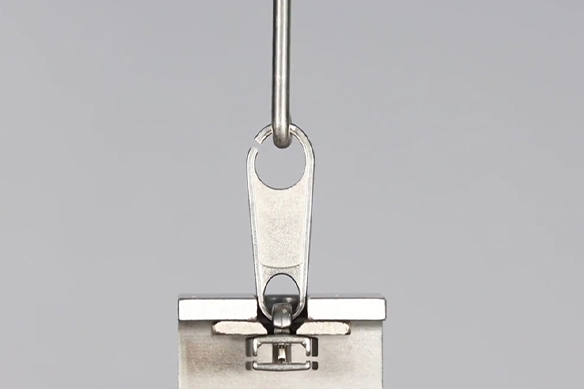
Quality consistency comes from process control, not final sorting alone
At RHF Zipper, our factory operates six production lines, and each line is supervised by quality control staff with more than five years of industry experience. I mention this because zipper accessories require daily discipline. One strong sample does not prove that 10,000 pieces will perform the same way.
Incoming inspection helps confirm that raw materials meet export expectations. Precision assembly helps control tolerance and zipper smoothness. Pull strength testing checks whether the puller can handle repeated force. Plating adhesion testing helps prevent color peeling or fading. Final inspection confirms that the shipment matches the approved sample and buyer standard.
- Material control: The factory should inspect zinc alloy, brass, stainless steel, tape, cord, and related components before production.
- Dimensional control: The puller size, hole size, and thickness should match the approved drawing.
- Performance testing: The factory should test pull strength, smooth opening, and assembly stability.
- Surface testing: The factory should check plating adhesion and appearance consistency.
- Final inspection: The factory should inspect finished goods before packing and shipment.
International buyers also need documentation discipline. When a brand sells to retailers, compliance questions can appear late in the process. It is better to confirm testing needs before production. Our zipper products can support standards and expectations such as BS EN 16732:2015, ASTM D2061 and D2062, OEKO-TEX, REACH, RoHS, CA65, GRS, BSCI, and ISO 9001-related quality control.
The practical advice is to treat the puller as part of the full zipper system. A premium puller still needs the right puller, chain, tape, plating, and assembly tolerance. That is why many of our long-term buyers ask us to supply complete zippers, zipper pulls, or finished zipper solutions instead of isolated accessories only.
Frequently Asked Questions
What is the best material for a custom metal zipper puller with logo?
Zinc alloy is usually the best all-around material because it casts well, supports complex logo shapes, and controls cost. Stainless steel or brass can be better for special strength, corrosion, or luxury requirements, but they should be reviewed against the design and budget.
Can I order only 300 custom zipper pullers?
Yes. Our MOQ starts from 300 pieces for custom zipper puller projects. This quantity is useful for new collections, market tests, photo samples, or buyer presentations before a larger seasonal order is placed.
How long does sampling take for metal zipper pullers?
Laser engraved samples usually take 3 to 5 days because they do not require a new logo mold. New mold samples usually take 7 to 9 days after drawing approval and mold payment. Complex finishes or composite materials may need more time.
Is laser engraving good enough for bulk production?
Laser engraving is good for small batches, fast samples, and test orders. For large-volume or long-term branded programs, a molded debossed or embossed logo usually gives better texture, consistency, and perceived value.
What information should I send for an accurate quotation?
You should send your logo file, puller size, zipper size, product application, material preference, finish color, logo process, quantity, target market, and testing requirements. This information helps the factory quote accurately and identify design risks before mold opening.
Conclusion
A custom metal zipper puller with logo should be engineered, not just decorated. The right material, thickness, logo process, plating method, and quality control plan will reduce breakage, fading, and production delays. If your brand is developing fashion, luggage, outdoor, or accessory products, send us your logo and application details. My team at RHF Zipper can review the structure and help you build a practical custom puller plan through our inquiry form.