Most B2B buyers make the same mistake. They write “waterproof zipper” in their RFQ without specifying the actual protection level they need. This single word causes product failures downstream.
Water-resistant zippers use surface chemical treatments to repel splashes. Waterproof zippers use a physical TPU or PU film barrier to block water penetration. They serve fundamentally different environments, and choosing wrong means field failures, returns, and brand damage.
I’ve spent over 18 years manufacturing zippers at our factory in Shenzhen and Dongguan. In that time, I’ve seen countless procurement teams confuse these two categories. The cost of that confusion is real—rejected shipments, warranty claims, and lost end-user trust. Let me break down exactly what separates these products at the engineering level, and when you actually need to move beyond both into a third, higher category entirely.
Structural Differences — How Do Water-Repellent and TPU Coated Zippers Actually Work?
The names sound similar. The physical structures are not. Your selection must be driven by the barrier mechanism, not the marketing label.
Water-repellent zippers rely on a DWR chemical coating on the tape surface only. TPU-coated waterproof zippers add a physical polymer film over the tape to create a sealed barrier. The difference is surface treatment versus structural membrane.
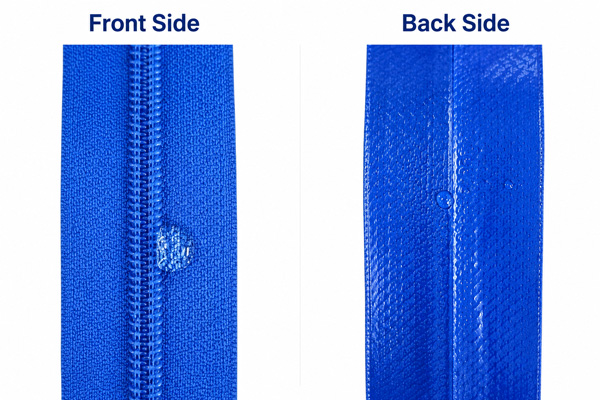
DWR Water-Repellent (Chemical Treatment)
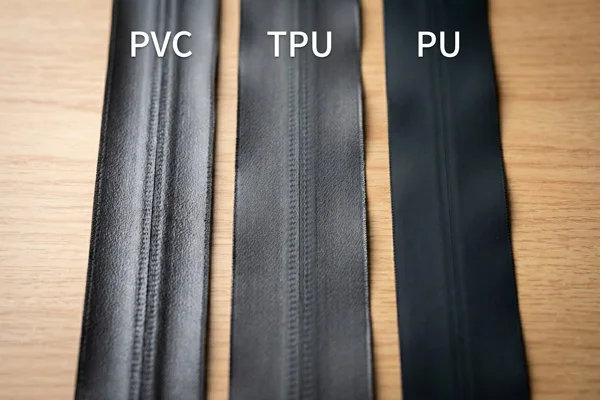
Waterproof TPU/PU Coated (Physical Film)
Left: DWR water-repellent zipper — surface chemical treatment, water beads and rolls off. Right: Waterproof zipper (TPU/PU coated) — physical polymer film barrier laminated onto tape.
Let me explain the engineering behind each type so you can match them to your actual application requirements.
Water-Repellent Zippers (DWR Surface Treatment)
The tape receives a Durable Water Repellent (DWR) chemical finish. Water beads up and rolls off the fabric surface. That’s it. There is no physical membrane covering the teeth or chain area.
Critical limitation: The teeth meshing zone still has micro-gaps. Under sustained rain, water pressure, or submersion, water will penetrate through those gaps. Period.
Where DWR Water-Repellent Zippers Work Best
Everyday bags, casual outerwear, commuter gear—products that encounter brief, light rain or occasional splashes but never sustained water exposure. DWR is cost-effective and adequate for these conditions.
TPU/PU Coated Waterproof Zippers
A thermoplastic polyurethane (TPU) or polyurethane (PU) film is laminated onto the zipper tape. This creates a physical barrier that blocks water from passing through the tape itself.
Key Comparison
| Feature | Water-Repellent (DWR) | Waterproof (TPU/PU Coated) |
| Barrier type | Chemical surface treatment | Physical polymer membrane |
| Protection level | Splashes, light rain | Moderate rain, brief water contact |
| Teeth gap sealed? | No | Partially (tape sealed, not teeth) |
| Suitable for | Casual jackets, commuter bags | Ski wear, hiking packs, rain gear |
| Durability risk | DWR degrades with washing | Film delamination under harsh conditions |
One hard rule from our production floor: TPU/PU coated waterproof zippers must never be used in products that will have prolonged contact with seawater. Saltwater is highly corrosive. Extended exposure causes the film to delaminate from the tape. Once the film separates, the entire waterproof function is gone. We’ve seen this failure mode repeatedly.
The Marine Environment Trap — Why Do Regular Waterproof Zippers Fail at Sea?
This is where I need to share a real project case. A client approached us developing a marine product. Their initial request was simple: “We need zippers with very good waterproof performance.”
Standard waterproof zippers fail in marine environments because DWR types leak through teeth gaps under water pressure, and TPU-coated types suffer film delamination from saltwater corrosion. Neither solution survives long-term ocean exposure.
Here’s how we diagnosed the problem. During our technical discussion, we established that this product would be continuously exposed to seawater—not just rain, not just splashes, but sustained saltwater immersion and spray.
The Decision Matrix We Walked Through
| Option | Failure Mode in Marine Use | Result |
| Water-repellent (DWR) | Water passes through teeth gaps immediately | Product leaks on first use |
| TPU/PU coated | Saltwater corrodes adhesive layer, film delaminates | Catastrophic failure within weeks |
| Airtight zipper | Sealed teeth structure, no exposed film | Survives marine conditions |
We stopped the conventional waterproof zipper selection immediately. The client didn’t need a “better waterproof zipper.” They needed an entirely different product category—an airtight zipper.
In my experience, most buyers don’t actually need the highest grade of protection. They need the grade that matches their specific environment. Helping a client avoid over-specification saves money. Helping them avoid under-specification saves their product reputation. In this case, nothing less than airtight would work.
Airtight Zippers — When You Need True Watertight Performance
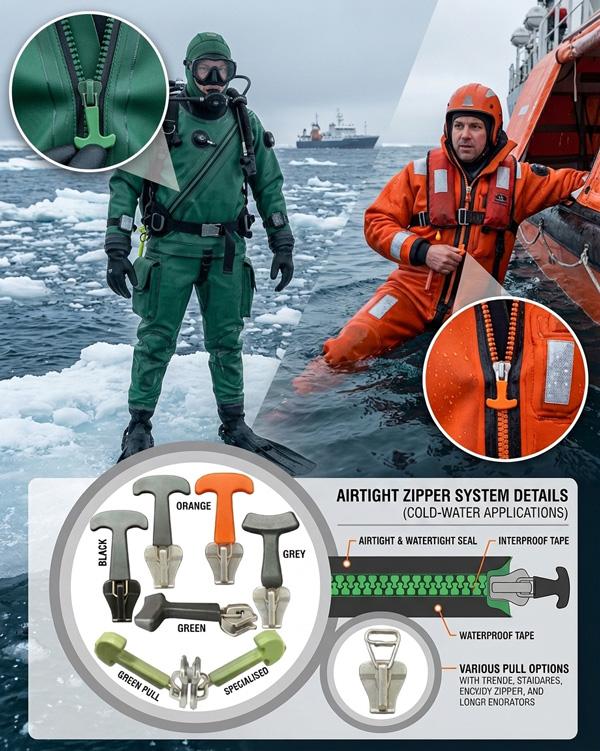
Airtight zippers exist in a completely separate product dimension. Waterproofing is just the baseline. These zippers block both water and air at the molecular level.
Airtight zippers use a high-pressure mechanical seal at the teeth meshing zone rather than relying on surface films. Taking the airtight zipper we currently produce at our factory as an example, we typically conduct an airtightness test at 30 kPa inflation pressure with a 30-second hold, requiring zero leakage and zero bubble formation. Specific test pressure and hold time can also be adjusted according to your product standards or industry specifications.
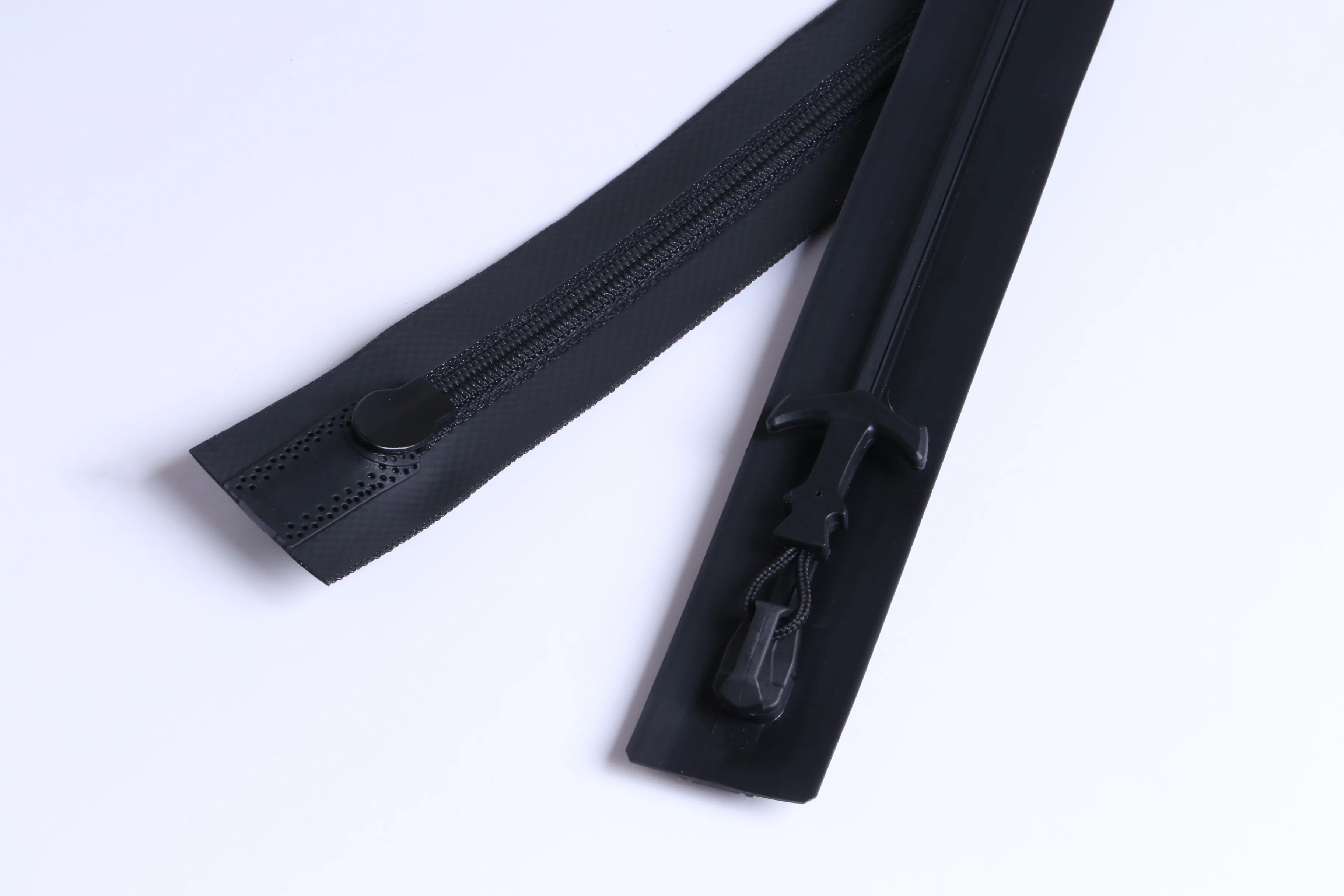
Why the Structure Is Fundamentally Different
Conventional waterproof zippers put the barrier on the tape. Airtight zippers put the barrier at the teeth. The teeth meshing area is engineered with compression-fit sealing geometry. When closed, the teeth form a gas-tight and water-tight seal under pressure.
This eliminates the delamination problem entirely. There is no exposed film for saltwater to attack. The seal is mechanical, not adhesive.
Factory Test Protocol
| Parameter | Our Standard Value | Notes |
| Test pressure | 30 kPa | Adjustable per client spec or industry standard |
| Hold duration | 30 seconds | Can extend per industry requirement |
| Pass criteria | Zero bubbles, zero pressure drop | 100% inspection before shipment |
These values represent our current production standard. Different brands and applications—including aerospace, military, and professional diving—may require different test parameters. We adjust the protocol to match your specific product or industry certification needs.
Why Airtight Zippers Feel “Hard to Pull” (User Education)
I want to address this directly because it causes confusion with nearly every first-time buyer.
Airtight zippers require significantly more force to open and close. This is not a defect. It is a direct physical consequence of the sealing structure. To maintain gas-tight integrity under pressure, the teeth must maintain high contact force against each other. Less contact pressure means less seal. More seal means more sliding resistance.
What we do before shipping: We inform every client about this characteristic in advance. We include specific handling instructions:
- First 10–20 cycles require a break-in period
- Apply manufacturer-recommended lubricant or wax before first use
- Never force the slider—smooth, steady pressure only
- Re-apply lubricant periodically to maintain both smoothness and seal longevity
When clients understand this upfront, complaints drop to nearly zero. The high resistance is proof that the seal works. If you want to learn more about airtight zippers—specifications, test protocols, and application cases—read our complete guide: Airtight Zipper: Everything You Need to Know →
How to Choose — What Should B2B Buyers Ask Before Specifying a Zipper?
Do not default to the highest protection grade. Value engineering means matching the material to the actual operating environment. Over-specification wastes budget. Under-specification causes field failures.
Before finalizing any zipper specification, clarify three things with your supplier: the end-use application environment, the specific water exposure type, and whether you have quantified test standards (kPa or hydrostatic head) the zipper must pass.
The Three Questions Framework
Ask yourself—and communicate clearly to your supplier—the following:
| Question | Why It Matters | Example |
| What is the final end product? | Determines base protection tier | Light shell jacket vs. offshore rescue suit |
| What water type will it contact? | Freshwater rain vs. corrosive seawater changes everything | Urban commuter vs. marine dive bag |
| Do you have a quantified test standard? | Removes ambiguity, enables factory QC alignment | “Must pass 20 kPa for 60 seconds” |
Quick Selection Guide
| Application | Recommended Type | Key Reason |
| Casual outerwear, everyday bags | Water-repellent (DWR) | Cost-effective, adequate for light exposure |
| Technical outerwear, hiking gear | TPU/PU coated waterproof | Blocks moderate rain, no submersion |
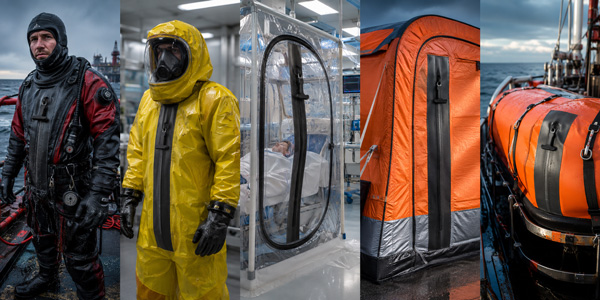
| Marine equipment, dive gear, inflatables | Airtight zipper | Resists saltwater, provides pressure-rated seal |
| Hazmat suits, dry suits, aerospace | Airtight zipper (custom spec) | Requires gas-tight certification |
The right zipper is not the most expensive one. It’s the one that matches your environment, your test requirements, and your end-user expectations exactly.
Conclusion
Water-repellent, waterproof, and airtight zippers serve three distinct protection tiers. Match the zipper to your environment and test standards—not to a marketing label.