Airtight Zipper vs Waterproof Zipper: What’s the Real Difference?
When buyers search for a sealed zipper, the terms can quickly become confusing: waterproof, water-resistant, watertight, airtight, leakproof, submersible, pressure-tested. They are often used together, but they do not mean the same thing.
For outdoor bags, marine equipment, diving suits, chemical protective clothing, inflatable products, and industrial containment systems, choosing the wrong zipper can affect more than appearance. It can change the final sealing performance of the entire product.
This guide explains the real difference between an airtight zipper and a waterproof zipper, how each one works, and how to choose the right solution for your application.
Waterproof, Water-Resistant, Watertight, and Airtight: What Do These Terms Really Mean?
Before comparing airtight zippers and waterproof zippers, it is important to separate four terms that are often mixed together.
Water-resistant usually refers to a zipper tape treated with a DWR chemical finish. Water beads up on the textile surface and rolls away. That is the basic principle. There is no physical TPU or PU film covering the chain or teeth area, so micro-gaps can still exist around the element engagement area.
Waterproof means the zipper uses a physical barrier, such as a TPU, PU, or PVC coating or laminated film, to reduce water penetration through the zipper tape and surface. Compared with DWR treatment, this is a stronger construction because it relies on a material layer, not only a surface chemical treatment.
Watertight usually refers to a higher level of water sealing. A watertight zipper is expected to prevent water leakage more reliably, especially when the product may face immersion or pressure.
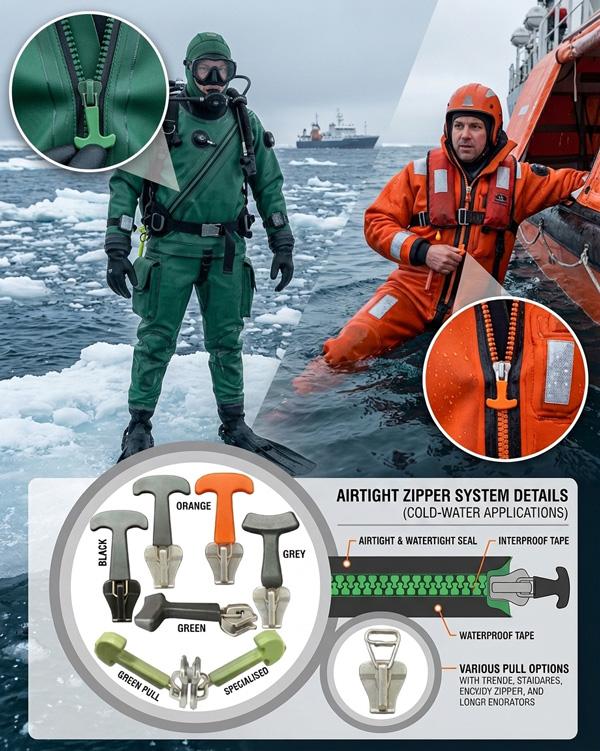
Airtight means the zipper is designed to block not only water, but also air, gas, vapor, dust, or pressure leakage. In RHF’s technical definition, an airtight zipper relies on a sealed tooth structure and TPU-coated sealing surface rather than an exposed surface film. The teeth and tape are integrated through high-temperature welding, sewing with sealing tape, or adhesive bonding, depending on the product structure and application.
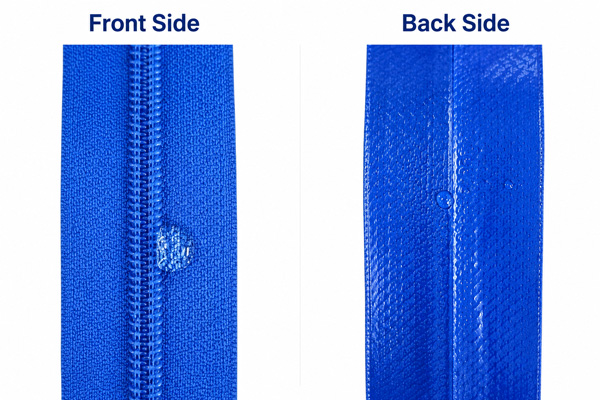
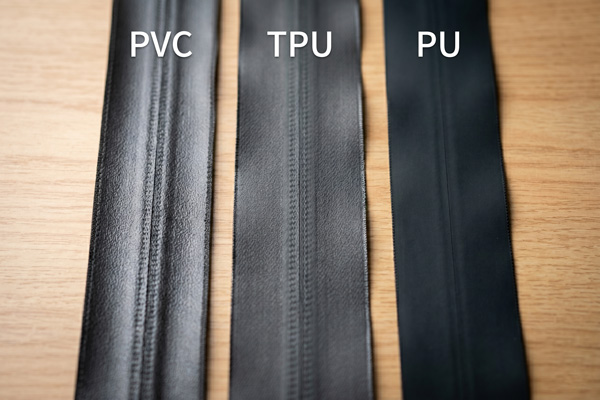
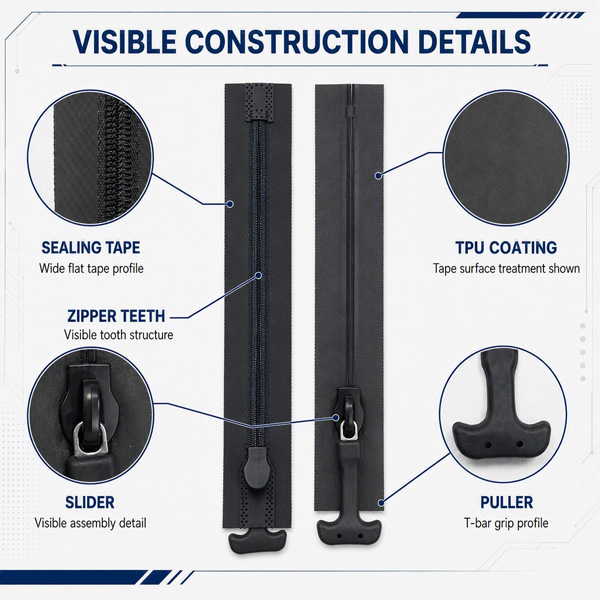
A simple way to understand the hierarchy is:
- Water-resistant zipper: DWR surface treatment for light rain and splashes
- Waterproof zipper: TPU, PU, or PVC film/coating creates a physical water barrier
- Watertight zipper: stronger water sealing, often for immersion or pressure-related use
- Airtight zipper: sealed tooth structure plus TPU sealing surface blocks air, gas, vapor, water, and pressure leakage
This is why a zipper can be waterproof without being airtight, but a true airtight zipper is usually expected to provide both air and water sealing.
| Zipper type | How it blocks water or leakage | Key limitation | Typical use |
|---|---|---|---|
| Water-resistant zipper | DWR chemical treatment on the zipper tape surface makes water bead and roll off | No physical film over the chain or teeth; micro-gaps remain in the engagement area | Light rain jackets, casual outdoor pockets, splash-resistant accessories |
| Waterproof zipper | TPU, PU, or PVC film/coating is laminated or coated onto the zipper surface to form a physical water barrier | Better water resistance, but not automatically airtight or pressure-sealed | Waterproof bags, outdoor gear, marine soft goods, rain protection products |
| Airtight zipper | Sealed tooth structure with TPU-coated sealing surface; teeth and tape are integrated by high-temperature welding, sewing with sealing tape, or adhesive bonding | Higher cost, stricter installation, and usually stronger operating force | Dry suits, chemical protective suits, inflatable products, isolation chambers, industrial sealing systems |
What Is a Waterproof Zipper?
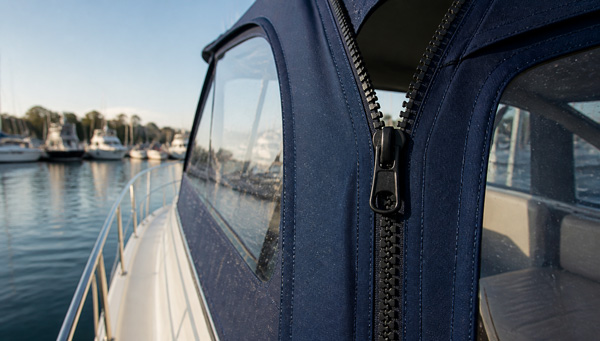
A waterproof zipper is a specialized closure designed to prevent water from entering through the zipper opening. It is commonly used in outdoor gear, waterproof bags, marine products, rainwear, tactical equipment, and sports products.
Most waterproof zippers rely on a physical coating or laminated film on the zipper surface. Common constructions include:
- TPU film or TPU coating on the zipper tape
- PU film or PU coating on the zipper tape
- PVC coating for specific cost or material-compatibility requirements
- A smooth external sealing surface
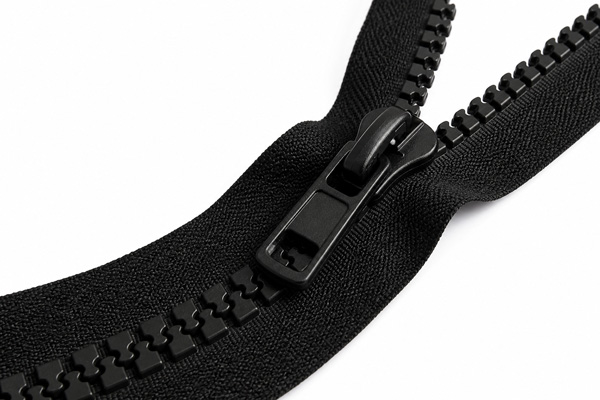
- Reverse coil or molded zipper structure
- Laminated or coated tape construction
- Welded or seam-sealed installation
- A slider and end-stop design that reduces water entry points
This is different from a DWR water-resistant zipper. DWR treatment only changes the surface behavior of the fabric tape; it does not create a continuous physical film over the chain or teeth area.
For many products, a waterproof zipper is enough. If the product only needs protection against rain, splashes, snow, or short-term wet conditions, a properly designed waterproof zipper can provide reliable performance.
However, waterproof does not always mean submersible. A zipper used on a rain jacket, waterproof backpack, or splash-resistant equipment cover may not be suitable for diving suits, pressure chambers, inflatable structures, or chemical protective suits.
That is where airtight zippers become necessary.
What Is an Airtight Zipper?
An airtight zipper is a high-performance sealing zipper designed to prevent air, gas, vapor, liquid, dust, and other substances from passing through the closure.
It is not simply a “stronger waterproof zipper.” It is part of a more demanding sealing system.
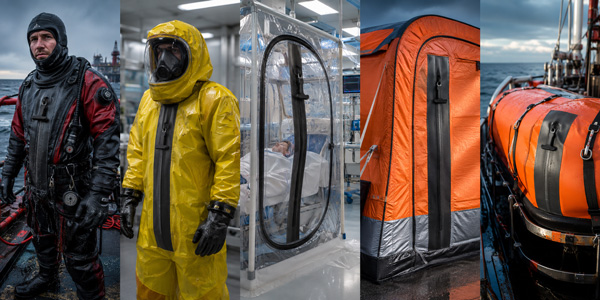
Airtight zippers are commonly used in applications such as:
- Dry suits and diving suits
- Immersion suits and survival suits
- Chemical protective suits
- Hazmat suits
- Isolation chambers
- Inflatable products
- Medical containment bags
- Military waterproof bags
- Industrial sealing covers
- Vacuum or pressure-sensitive equipment
The purpose of an airtight zipper is to maintain a controlled barrier. In some applications, that barrier protects the user from the environment. In others, it protects the contents inside the product. In pressure-sensitive products, it helps maintain inflation, vacuum, or internal pressure.
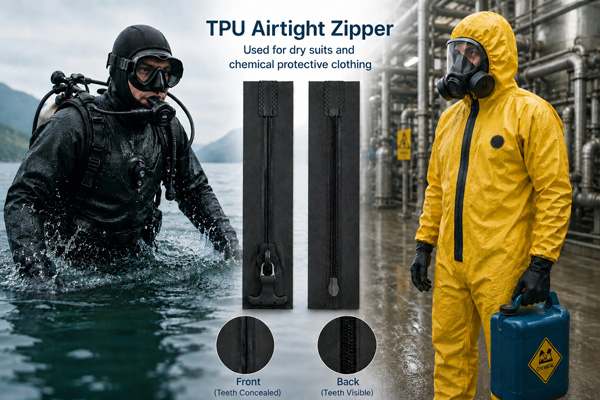
Unlike ordinary waterproof zippers that often rely on an external TPU, PU, or PVC film to block water, an airtight zipper must seal through the tooth structure itself. The sealing area is normally TPU-coated, while the teeth and tape are integrated through high-temperature welding, sewing with sealing tape, or adhesive bonding. This structure is designed to reduce leakage paths around the teeth, tape, slider, and end stops.
Because the sealing requirement is higher, airtight zippers usually require more precise materials, stronger sealing structures, and more controlled installation methods than standard waterproof zippers.
Airtight Zipper vs Waterproof Zipper: The Core Difference
The core difference is simple:
A waterproof zipper is mainly designed to stop water. An airtight zipper is designed to stop water, air, gas, vapor, and pressure leakage.
| Comparison point | Waterproof zipper | Airtight zipper |
|---|---|---|
| Main function | Blocks water entry | Blocks water, air, gas, vapor, and pressure leakage |
| Typical protection level | Rain, splashes, moisture, short wet exposure | Immersion, gas barrier, pressure sealing, hazardous environments |
| Common applications | Waterproof bags, outdoor gear, rainwear, marine accessories | Dry suits, chemical protective suits, inflatable products, isolation chambers |
| Material structure | TPU, PU, or PVC film/coating on the zipper surface | Sealed tooth structure with TPU-coated sealing surface |
| Sealing path | Mainly blocks water through the coated surface | Blocks leakage through the teeth, tape, slider, and end-stop sealing system |
| Flexibility | Usually more flexible | Often stiffer due to sealing pressure |
| Cost | Generally lower | Generally higher due to stricter sealing and testing requirements |
| Installation sensitivity | Important | Critical |
| Best for | Moisture protection | Complete barrier protection |
The practical question is not “Which zipper is better?” The better question is:
What does the product need to block?
If the answer is light rain or splashes, a DWR water-resistant zipper may be enough. If the answer is water penetration through the zipper surface, a TPU, PU, or PVC-coated waterproof zipper is usually more suitable. If the answer includes air, gas, vapor, chemical exposure, pressure, or full immersion, an airtight zipper is the safer choice.
| Market category | Main construction | Application features | Recommended applications |
|---|---|---|---|
| DWR water-resistant zipper | Textile zipper tape treated with DWR chemical finish; no physical film over the teeth | Lightweight, flexible, suitable for light splashes, but water can enter through micro-gaps under continuous rain, pressure, or immersion | Light outdoor apparel, casual bags, splash-resistant pockets |
| TPU / PU / PVC waterproof zipper | Physical TPU, PU, or PVC film/coating laminated or coated onto the zipper surface | Stronger water barrier than DWR; suitable for rain, wet environments, and waterproof soft goods, but not automatically airtight | Waterproof bags, marine bags, outdoor equipment, rain protection products |
| TPU airtight zipper | Sealed tooth structure with TPU-coated sealing surface; teeth and tape integrated by high-temperature welding, sewing with sealing tape, or adhesive bonding | Blocks water, air, gas, vapor, and pressure leakage; suitable for safety-critical or pressure-sensitive products | Dry suits, chemical protective suits, isolation chambers, inflatable products, industrial sealing systems |
How Do Waterproof and Airtight Zippers Create a Seal?
Waterproof and airtight zippers create sealing performance through different combinations of material, structure, and closing pressure.
A waterproof zipper usually depends on a coated or laminated surface that covers the zipper tape and reduces water penetration. The coating may be made from TPU, PU, or PVC, depending on the product requirement. In many designs, the zipper teeth or coils are protected behind the coated surface, creating a smoother barrier against water.
An airtight zipper requires a more complete sealing mechanism. Instead of relying on an exposed surface film, it uses a sealed tooth structure with a TPU-coated sealing surface. When closed, the zipper must create continuous contact along the teeth, tape, slider, and end-stop area to reduce leakage paths.
Three factors determine the sealing result:
- The tape material. The tape must be compatible with the surrounding fabric or film. TPU-coated fabric, PVC-coated fabric, rubberized materials, and laminated textiles may require different zipper constructions.
- The zipper structure. Coil, molded, metal, toothless, and pressure-sealing designs behave differently under bending, pulling, immersion, and pressure.
- The installation method. Sewing, seam sealing, high-frequency welding, ultrasonic bonding, or adhesive bonding can all change the final sealing performance.
This is why the zipper itself is only one part of the sealing system. A high-quality zipper can still fail if it is installed on the wrong material or integrated with the wrong process.
Performance Standards: IP Ratings, Pressure, and Sealing Strength
For professional applications, marketing words are not enough. Buyers should look for measurable performance standards.
Common indicators include:
- IP ratings. IP ratings describe protection against dust and water. For example, IP67 generally refers to dust protection and temporary immersion protection under defined test conditions. IPX7 and IPX8 are often used to describe different levels of water immersion resistance.
- Pressure resistance. For diving suits, inflatable products, industrial covers, or containment systems, water pressure or air pressure matters. Some high-performance zipper systems are described with pressure values such as bar or PSI, depending on the product design and test method.
- Sealing strength. Sealing strength indicates how well the zipper can maintain its barrier when exposed to pressure, pulling, bending, or external force.
- Cross tensile strength. Cross tensile strength measures resistance when force is applied across the zipper. This is important for products that may be stretched, inflated, pulled, folded, or used under load.
- Cycle testing. Open-close cycle testing helps evaluate whether the zipper can maintain performance after repeated use.
For B2B product development, the key is to match the test requirement to the real application. A zipper for a rainproof backpack does not need the same standard as a zipper for a chemical protective suit or dry diving suit.
When Is a Waterproof Zipper Enough?
A waterproof zipper is usually enough when the main risk is external water exposure, not pressure or gas leakage.
Typical suitable applications include:
- Waterproof backpacks
- Outdoor gear pockets
- Rainwear and protective outerwear
- Marine soft bags
- Fishing bags
- Travel bags
- Motorcycle gear
- Sports and tactical accessories
- Equipment covers exposed to rain or splashes
In these products, the zipper needs to keep water out during normal use. It may face rain, snow, spray, wet hands, muddy environments, or short contact with water.
A waterproof zipper may be the right choice if:
- The product is not designed for full submersion
- The zipper does not need to hold pressure
- Air leakage is not a functional problem
- Flexibility and smooth operation are important
- The budget does not justify an airtight zipper
- The application mainly involves rain, splashes, or moisture
However, the buyer should still check the required protection level. A water-resistant zipper, a waterproof zipper, and a watertight zipper are not always interchangeable.
When Do You Need an Airtight Zipper?
You need an airtight zipper when the product must create a complete barrier against more than water.
Airtight zippers are required when the product must block or contain:
- Air
- Gas
- Vapor
- Dust
- Chemical exposure
- Biological contamination
- Internal or external pressure
- Full immersion conditions
Typical applications include:
- Dry suits and diving suits
- Chemical protective suits
- Hazmat suits
- Firefighter and rescue suits
- Isolation chambers
- Medical containment systems
- Inflatable tents
- Inflatable boats
- Survival equipment
- Military waterproof storage
- Industrial containment covers
In these applications, zipper failure can compromise safety, pressure stability, or containment performance. A standard waterproof zipper may stop rain, but it may not prevent air leakage, vapor transmission, or pressure loss.
Choose an airtight zipper when the product depends on sealing integrity as a functional requirement, not just a comfort feature.
Installation Matters: Welding, Sewing, and Seam Sealing Can Change the Final Performance
A sealed zipper does not work alone. It becomes effective only when it is correctly integrated into the final product.
This is one of the most important points in waterproof and airtight zipper selection:
The zipper is not the entire waterproof system. It is one component of the sealing structure.
Several installation factors can change the final result:
- Material compatibility. The zipper tape must match the fabric, film, or coated material. TPU, PVC, PU, and laminated fabrics do not all behave the same during welding or bonding.
- Welding method. High-temperature welding and adhesive bonding can create strong sealed joints when the materials are compatible. They are often preferred for waterproof and airtight applications because they avoid stitch holes.
- Sewing and sealing tape. Sewing can create needle holes that may weaken waterproof performance. If sewing is used, sealing tape must be applied to cover the stitch line.
- End-stop sealing. The ends of the zipper are common leakage points. A product may fail even if the zipper chain itself is sealed, because the end stops are not properly integrated.
- Slider closure. Some sealed zippers must be fully closed into a garage or end-stop structure to achieve the intended protection. If the slider is not completely locked, performance may drop.
- Product design geometry. Sharp curves, excessive bending, high tension, or poor slit width can affect slider movement and sealing pressure.
For professional applications, zipper selection and product design should be considered together. The best result comes from matching the zipper, fabric, welding method, end design, and test requirement from the beginning of development.
How to Choose Between an Airtight Zipper and a Waterproof Zipper
The right zipper depends on the real working environment of the final product.
Use these questions as a selection checklist:
- 1. Will the product be submerged? If the product only faces rain or splashes, a waterproof zipper may be enough. If it will be submerged, a watertight or airtight zipper may be required.
- 2. Does the product need to block air or gas? If air, gas, vapor, or odor leakage matters, choose an airtight zipper.
- 3. Is pressure involved? For inflatable products, diving suits, vacuum systems, or sealed chambers, pressure resistance is a key requirement.
- 4. What material will the zipper be attached to? The zipper must be compatible with the product material and installation method, especially for welded products.
- 5. Is flexibility or sealing strength more important? Waterproof zippers are often more flexible. Airtight zippers may be stiffer but offer stronger barrier performance.
- 6. What testing standard is required? Check whether the product needs an IP rating, pressure test, immersion test, leakage test, or cycle test.
- 7. What is the consequence of zipper failure? If failure only causes inconvenience, a waterproof zipper may be sufficient. If failure affects safety, pressure, contamination control, or product function, airtight sealing should be considered.
Still unsure which zipper fits your project? You can review RHF’s airtight zipper product range to see how TPU-coated sealing systems are built for dry suits, protective suits, inflatable products, and industrial sealing applications.
Final Verdict: Waterproof Protects Against Water; Airtight Protects Against Water, Air, and Pressure
A waterproof zipper and an airtight zipper are not the same product category.
A DWR water-resistant zipper only handles light rain. A TPU, PU, or PVC waterproof zipper blocks water with a physical film or coating. But when the product must block air, gas, vapor, dust, pressure, or full immersion, an airtight zipper is the only reliable answer.
For product developers, the decision should be based on application conditions, not terminology.
Not sure whether your product needs a waterproof zipper or an airtight zipper?
Choosing the wrong sealing level can cause costly redesigns, failed pressure tests, or product recalls. Before mass production, let RHF Zipper help you confirm the right structure, coating material, and installation method for your application.
At RHF Zipper, we support custom waterproof and airtight zipper solutions for demanding applications, including outdoor equipment, marine products, diving suits, protective clothing, inflatable products, and industrial sealing systems. If you are developing a product that requires reliable sealing performance, our team can help evaluate the zipper structure, material compatibility, installation method, and performance requirements before production.