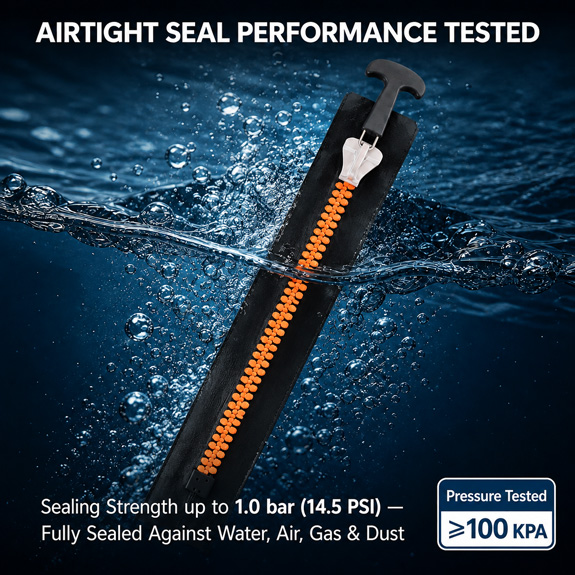
Airtight zippers are not ordinary fasteners with a waterproof coating. In demanding applications, they function as part of an engineered sealing system. Their role is to control the movement of water, air, gas, dust, and other contaminants across an opening that still needs to be opened, closed, inspected, repaired, or reused.
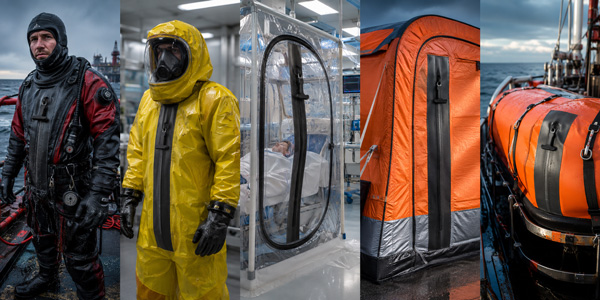
That is why airtight zippers are widely used in dry suits, immersion suits, chemical protective clothing, inflatable equipment, waterproof storage bags, military protective packaging, isolation chambers, and other products where failure is not just inconvenient — it can compromise safety, pressure retention, or product integrity.
This guide explains what airtight zippers are, how they differ from waterproof zippers, what structures and materials are commonly used, how sealing performance is achieved, and how engineers, product developers, and procurement teams can choose the right zipper for a specific application. If you are already evaluating airtight zipper options for your project, you are welcome to contact RHF Zipper directly for technical consultation and sample requests.
What Are Waterproof and Airtight Zippers?
A waterproof zipper is designed to prevent liquid water from passing through the zipper area. Depending on the product design, this may involve coated tape, sealed elements, molded teeth, TPU or PU film, and special slider or end-stop structures.
An airtight zipper goes one step further. It is designed to restrict the passage of air or gas as well as water. In practical terms, airtight zippers are used when the product must maintain pressure, prevent leakage, isolate the internal environment, or protect the contents from outside contamination.
The key point is this: an airtight zipper should be understood as an engineered sealing component, not just a fastening accessory.
Its performance depends on several factors working together:
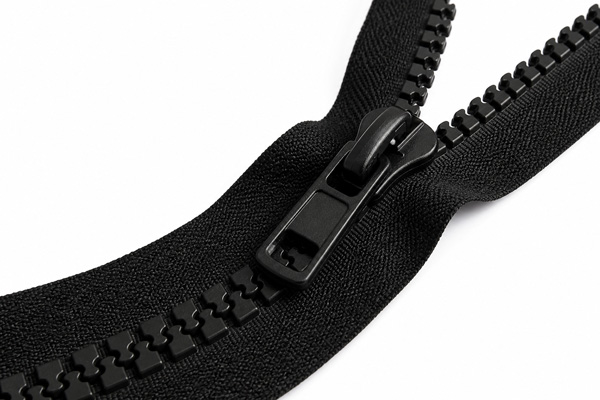
- Zipper teeth, chain, rail, or sealing profile
- Tape or base material
- Coating, film, or rubberized sealing layer
- Slider engagement and closing pressure
- End stop, docking end, or garage design
- Installation method, including welding, sewing, seam sealing, or bonding
- Maintenance and correct operation during use
For simple outdoor products, water resistance may be enough. But for dry suits, protective suits, inflatable structures, isolation products, and pressure-sensitive industrial packaging, the zipper must be evaluated as part of the complete sealing system. Explore our full range of airtight zipper products to find the right fit for your application.
Airtight Zipper vs Waterproof Zipper: What’s the Difference?
The terms “water-resistant,” “waterproof,” “watertight,” and “airtight” are often used interchangeably, but they do not mean the same thing.
A water-resistant zipper can resist water exposure to a limited degree, such as rain, spray, or short-term splashing. A waterproof or watertight zipper is designed to prevent water penetration under more demanding conditions. An airtight zipper is designed to control air or gas leakage in addition to water ingress.
| Comparison Point | Waterproof Zipper | Airtight Zipper |
|---|---|---|
| Main function | Prevents water penetration | Prevents air/gas leakage and water penetration |
| Typical concern | Water ingress | Pressure loss, gas leakage, contamination, water ingress |
| Common test reference | Water immersion or IP-related testing | Air pressure, leakage, pressure retention, plus water testing |
| Structure requirement | Coated tape, sealed teeth, molded elements, or film layer | Stronger sealing profile, compressed sealing layer, controlled slider engagement, sealed end closure |
| Typical applications | Waterproof bags, outdoor gear, waders, marine equipment | Dry suits, immersion suits, chemical protective suits, inflatable products, isolation chambers, military packaging |
The difference is not simply that an airtight zipper is “better.” The difference is application logic. A waterproof zipper protects against water. An airtight zipper protects against pressure loss and environmental exchange.
For example, a waterproof storage bag may only need to stop rain or temporary water exposure. A dry suit, inflatable product, or isolation chamber may need the zipper to help maintain a controlled internal environment. In that case, airtight performance becomes a functional requirement, not an optional upgrade.
Types of Airtight Zippers and Their Structures
Airtight zippers can be classified by material, structure, and closure form. The right choice depends on pressure requirements, product size, flexibility, installation method, operating environment, and expected service life.
1. Plastic Airtight Zippers
Plastic airtight zippers are commonly used in applications that require a balance of sealing performance, flexibility, corrosion resistance, and practical operation. They are suitable for dry suits, immersion suits, protective equipment, waterproof bags, inflatable products, and other products that require reliable air and water control.
In this structure, molded plastic elements and coated tape work together with the slider to create controlled engagement and compression. Plastic airtight zippers are often selected when the product needs a durable sealing closure without unnecessary weight or corrosion concerns.
2. Nylon Airtight Zippers
Nylon airtight zippers are used where flexibility, lighter operation, and fabric compatibility are important. They can be suitable for protective garments, dry bags, soft containers, outdoor equipment, and other applications that need a more flexible sealing solution.
The performance of a nylon airtight zipper depends on the zipper structure, coating layer, slider engagement, and installation method. It should be tested as part of the finished product, especially when the application involves pressure retention, immersion, or repeated bending.
3. Toothless Airtight Zippers
Toothless airtight zippers use a rail-style or profile sealing structure instead of traditional visible teeth. These designs rely on precise profile engagement, compression, and controlled slider movement to form an airtight and waterproof seal.
This type of zipper can be useful when smooth operation, quiet use, flexible product design, or a clean external appearance is desired. However, the end closure and full slider engagement remain critical to performance.
4. Closure Forms
Airtight zippers may also differ by closure format:
- Closed-end zipper: Common in dry suits, bags, and sealed compartments.
- Open-end zipper: Used when the opening must separate completely, such as some suits or covers.
- Two-way zipper: Allows opening from either direction.
- Double-slider zipper: Useful when internal and external operation are required.
- Separable or ring-shaped closure: Used for special integration designs, such as connecting components or forming circular access openings.
Not sure which structure fits your product? Send us your application details and our team will help you identify the right zipper type.
Materials Used in Airtight Zippers
Material selection has a direct impact on sealing performance, flexibility, durability, installation compatibility, and service life.
Tape Material
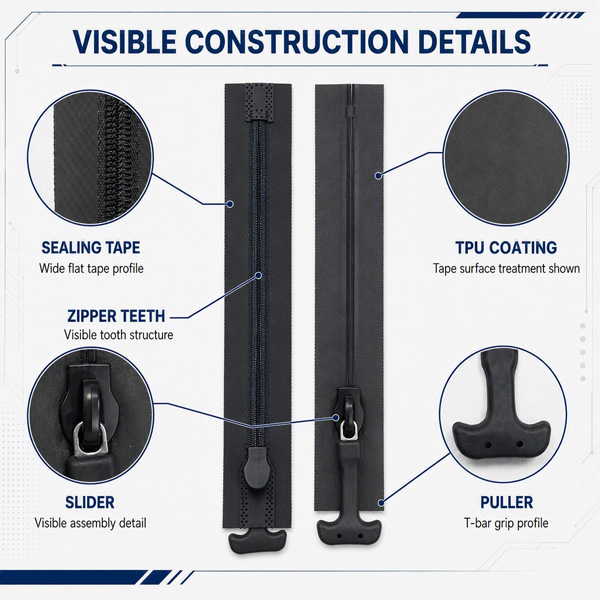
The tape of an airtight zipper is typically made from polyester. Polyester tape provides the textile base needed for dimensional stability, flexibility, and integration with coated fabrics or protective materials.
Teeth Material
The teeth are generally made from nylon or plastic. Nylon teeth can support flexibility and smoother operation, while plastic teeth provide stable engagement and practical durability for waterproof and airtight applications.
TPU Coating Process
The waterproof and airtight barrier is created through a TPU coating process. TPU coating helps form a continuous sealing layer, improves water resistance, and supports later bonding, welding, or sealing operations during product assembly.
Bonding Between Teeth and Tape
The connection between the teeth and polyester tape can be achieved through high-temperature welding, sewing with sealing tape, or adhesive bonding. The correct method depends on the product structure, coating condition, fabric compatibility, and required sealing performance.
Slider Material
The slider can be made from metal or plastic. Metal sliders are often selected for strength and durability, while plastic sliders can reduce weight and improve corrosion resistance in specific applications.
In many real-world failures, the zipper body is not the only issue. Leakage may occur at the end stop, the seam, the bonded area, or the point where the slider is not fully closed.
How Airtight Zippers Achieve Sealing Performance
Airtight zipper performance is created by a complete sealing chain. If one part of that chain fails, the whole system may lose pressure or allow leakage.
1. Mechanical Engagement
The first barrier is created when the teeth, rails, or sealing profiles interlock. This engagement aligns the two sides of the zipper and creates the foundation for sealing.
2. Compression of the Sealing Layer
Airtight zippers often rely on a compressed coating, rubber layer, TPU profile, or sealing surface. When the zipper is closed correctly, these surfaces are pressed together to reduce micro-gaps where air or water could pass through.
3. Slider-Controlled Closure
The slider determines whether the elements are fully engaged. If the slider is pulled too quickly, pulled at an angle, or stopped before reaching the docking position, the zipper may look closed but fail to provide full sealing performance.
4. End Closure Design
The end stop, docking end, or garage is one of the most important areas in airtight zipper design. Many leakage problems begin at the end closure because this area must transition from a moving zipper system into a fixed sealed endpoint.
5. Installation Seam Integrity
Even if the zipper body performs well, the final product can still leak if the connection between the zipper and product fabric is not properly sealed. For airtight zippers, common connection methods include high-temperature welding, sewing with sealing tape, and adhesive bonding. The method must match the polyester tape, TPU coating, product fabric, and required sealing performance.
Testing Standards and Pressure Ratings
Testing is essential because airtight zipper performance cannot be judged by appearance alone. A zipper may look heavy-duty but still fail if the sealing path, end closure, or installation seam is not suitable for the target application.
Water Ingress Testing
Waterproof performance is commonly evaluated through water exposure, immersion, or IP-related testing. For example, IPX7 and IPX8 are often used to describe different levels of water immersion resistance. These tests help determine whether water can enter through the zipper area under defined conditions.
Air Pressure or Leakage Testing
Airtight performance is usually evaluated through air pressure, leakage, or pressure retention testing. Ratings may be expressed in kPa, bar, or PSI. However, pressure ratings should never be interpreted without application context.
A zipper used in a dry suit, a medical isolation product, and an inflatable chamber may face very different pressure loads, bending conditions, and operating cycles. The required pressure rating should be matched to the actual product design.
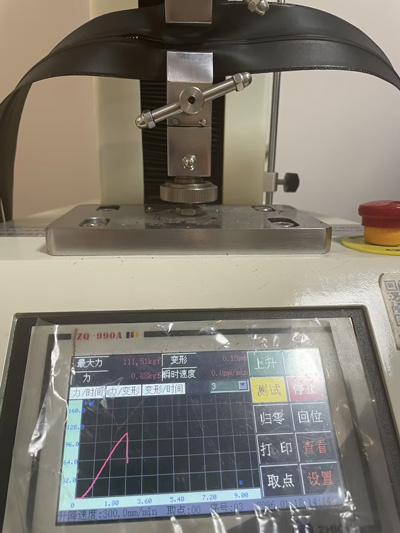
Mechanical Durability Testing
Mechanical tests may include:
- Crosswise tensile strength
- Slider pull strength
- Top stop or end stop strength
- Opening and closing cycle durability
- Operating force
- Temperature resistance
- Aging, hydrolysis, or chemical exposure resistance
A high pressure rating alone does not guarantee product success. The final product should be tested as an assembled system, including the zipper, fabric, seam, welding or bonding area, and end closure. If you need support evaluating test requirements for your application, contact our technical team for guidance.
Applications of Airtight Zippers
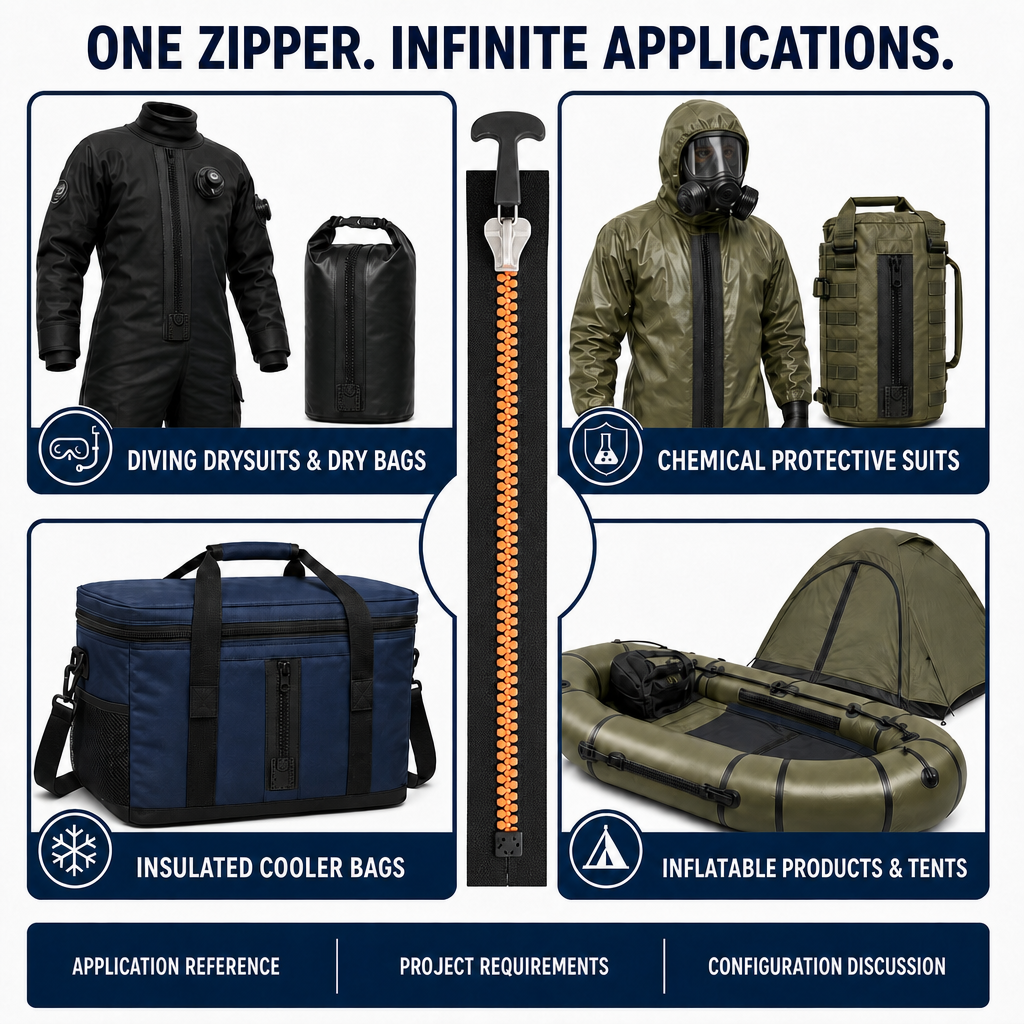
Airtight zippers are used wherever controlled sealing, pressure retention, or environmental isolation is required. Instead of listing applications only by industry, it is more useful to classify them by sealing demand.
Human Protection
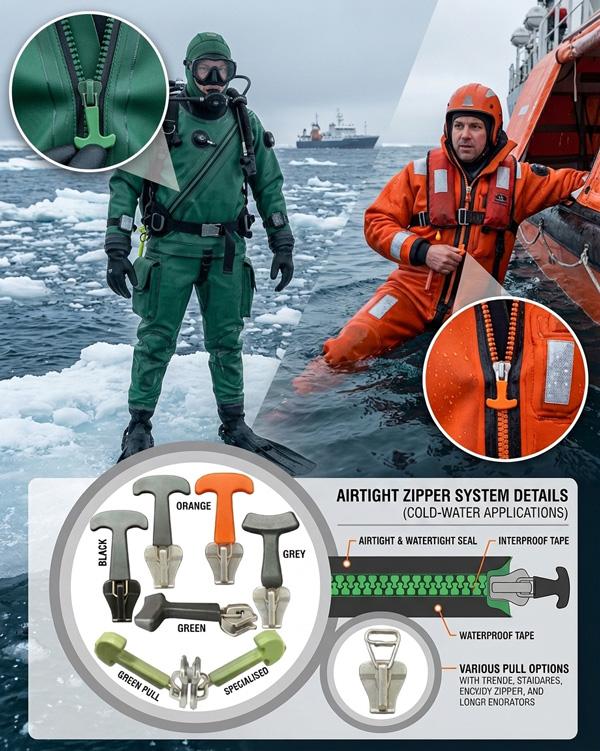
Dry suits, immersion suits, survival suits, and chemical protective suits require reliable sealing because the user’s safety depends on keeping water, air, or hazardous substances from passing through the closure system.
In these applications, zipper failure can directly affect protection, comfort, and safety. The zipper must be selected together with the suit material, seam technology, and maintenance process.
Pressure-Holding Products
Inflatable boats, packrafts, water balls, flexible air chambers, and vacuum storage systems may require zippers that can maintain internal or external pressure. Here, airtight performance is closely connected to product usability and safety.
Waterproof Storage and Transport
Dry bags, cooler bags, waterproof backpacks, phone cases, and medical transport bags may use waterproof or airtight zippers depending on the required protection level. For high-value equipment or sensitive contents, air and water control may both be important.
Industrial Containment
Airtight zippers are used in isolation chambers, flexible tanks, containment bags, cleanroom-related products, hazardous material handling, and other industrial sealing systems. These applications often require careful matching of material compatibility, installation method, and test standards.
Military and Emergency Equipment
Military protective packaging, emergency rescue equipment, and field-deployable sealing systems often require zippers that can withstand harsh environments, repeated use, and strict sealing requirements.
Installation Methods and Maintenance
Correct installation is just as important as zipper selection. A high-quality airtight zipper can fail if it is installed with the wrong method or used without proper maintenance.
High-Temperature Welding
High-temperature welding can be used to connect the zipper teeth area and polyester tape with the TPU-coated sealing structure. It helps create a firm and continuous connection when the coating, tape, and product fabric are compatible.
Sewing with Sealing Tape
Sewing may be used in some product structures, but needle holes can create leakage paths. For airtight or watertight products, sewing should be combined with sealing tape to restore barrier performance around the stitched area.
Adhesive Bonding
Adhesive bonding can be used when the zipper tape, TPU coating, and application fabric are compatible with the adhesive system. It is important to verify bonding strength, sealing continuity, and long-term durability before mass production.
Maintenance Recommendations
To maintain sealing performance:
- Clean the zipper before closing, especially after exposure to sand, salt, mud, or dust.
- Pull the slider slowly and in a straight direction.
- Do not force the slider if resistance is unusually high.
- Make sure the slider reaches the end stop, garage, or docking position.
- Rinse with fresh water after marine use and dry fully before storage.
- Avoid long-term folding, compression, high heat, UV exposure, and humid storage.
- Inspect the end stop, slider, and seam area regularly.
Many zipper failures are not caused by the zipper chain itself. They are caused by improper installation, incomplete closure, contamination, damaged end stops, or poor maintenance.
How to Choose the Right Airtight Zipper for Your Application
Choosing an airtight zipper should begin with the application, not the product model. Before selecting a zipper, define the real sealing requirement. Use the checklist below as a starting point.
1. Define the Sealing Requirement
Does the product need splash protection, water immersion resistance, watertight sealing, or true airtight pressure retention? These are different performance levels.
2. Determine the Pressure Requirement
Clarify whether the product will experience positive pressure, negative pressure, dynamic pressure, bending under pressure, or repeated pressure cycles.
3. Check the Operating Environment
Consider fresh water, salt water, chemicals, oil, UV exposure, temperature, humidity, abrasion, and hydrolysis risk.
4. Select the Structure
Choose between plastic airtight zippers, nylon airtight zippers, or toothless airtight zippers based on the required strength, flexibility, sealing performance, installation method, and operating environment.
5. Confirm the Closure Form
Decide whether the product needs a closed-end, open-end, separable, two-way, double-slider, or special closure design.
6. Match the Installation Method
Confirm whether the zipper will be RF welded, ultrasonically bonded, sewn and seam-sealed, or glued. The zipper material and product fabric must be compatible.
7. Evaluate Operation and Maintenance
Consider opening frequency, required operating force, user environment, cleaning conditions, and whether the zipper needs internal and external pullers.
8. Request Samples and Test the Complete Product
A zipper should be tested not only as a component but also as part of the final assembled product. Testing should include the zipper body, seam, end closure, and real operating conditions.
For custom projects, share the following information with your zipper supplier:
- Application type
- Required pressure or waterproof level
- Product material
- Installation method
- Required length
- Closure type
- Operating environment
- Expected opening and closing frequency
- Any chemical, temperature, or UV exposure requirements
This helps the supplier recommend a zipper structure that fits the application instead of simply providing a standard model. You can also browse our airtight zipper product range to compare available options before reaching out.
Conclusion
An airtight zipper is more than a waterproof closure. It is a functional sealing component that must be selected, installed, tested, and maintained as part of a complete system.
For demanding applications such as dry suits, immersion suits, chemical protective equipment, inflatable products, military packaging, medical isolation products, and industrial containment systems, the right zipper can improve product reliability and reduce failure risk.
The best choice depends on the full engineering context: sealing requirement, pressure rating, material compatibility, installation method, end closure design, operating environment, and maintenance process.
If you are developing a product that requires waterproof or airtight sealing, RHF Zipper can help review your application requirements and recommend a suitable airtight zipper structure for sampling and testing. Contact us with your application, pressure requirement, material, installation method, and zipper length — our team will help you evaluate the right solution for your project.