Custom PVC Zipper Puller: How to Design, Brand and Order Logo Pullers?
I have seen good bag designs lose value because the puller looked cheap, failed in use, or could not pass brand compliance checks.
A custom PVC zipper puller is a soft rubber branded pull tab made by drip molding. I use it when a brand needs strong color, flexible shape, clear logo detail, and controlled mold cost for apparel, bags, gifts, and lifestyle products.
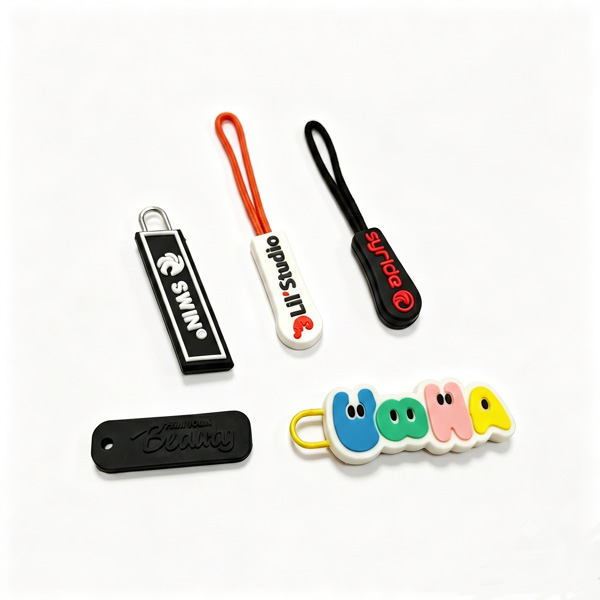
I write this guide from the factory side. I have worked with zipper and puller projects for 18 years. I know that most sourcing mistakes happen before the first sample is made. A buyer sends a beautiful 2D logo. A designer expects the same look in soft PVC. A factory opens a mold too fast. Then the sample comes back with weak lines, wrong color zones, or poor pulling strength. I want to explain the real rules before that happens.
Why Should I Choose PVC for Custom Zipper Pullers?
I often see brands overpay for a material before they define the real product need. That mistake adds cost and slows down launch dates.
I choose PVC when the project needs rich colors, flexible shapes, logo detail, and reasonable mold cost. PVC is not the best material for every use, but it is one of the best choices for visual branding and multi-SKU development.
PVC, also called soft rubber in many sourcing teams, gives a brand more shape freedom than metal and more color freedom than many woven or molded alternatives. I use it for fashion bags, children’s items, promotional products, stationery cases, light outdoor bags, and lifestyle accessories. The key value is not only the low unit cost. The real value is the balance between design freedom and development speed.
What PVC does well in real production
| Buyer Need | PVC Advantage | My Practical Advice |
|---|---|---|
| Logo color match | PVC can show several solid colors in one mold. | I ask for Pantone numbers before sampling. |
| Special shape | PVC supports custom outlines, icons, mascots, and IP characters. | I keep thin parts wide enough to avoid tearing. |
| SKU speed | PVC mold cost is usually easier to manage than TPU. | I use PVC for fast fashion, gifts, and test programs. |
I also compare PVC with TPU for some clients. TPU is a strong option for high-end outdoor and some premium products. It can give a cleaner material story for certain brands. Still, TPU mold development cost is usually much higher. When a brand needs ten colorways or many seasonal designs, the mold cost can become a real barrier. For that reason, I still see PVC as the most practical material for many branded puller projects.
Which PVC Puller Structure Should I Use for My Logo?
I have seen many logo samples fail because the design was good on screen but wrong for the molding structure.
Most PVC zipper pullers use one of three surface structures: flat color separation, raised detail, or debossed detail. I select the structure based on logo detail, color count, touch feel, and wear risk.
The first structure is flat color separation. I use this most often for commercial orders. The surface is flat. The logo colors are divided by physical walls or separated zones inside the mold. This structure is stable in mass production. It is also easier to inspect because the surface stays even. I like it for brand logos, letter marks, and simple icons.
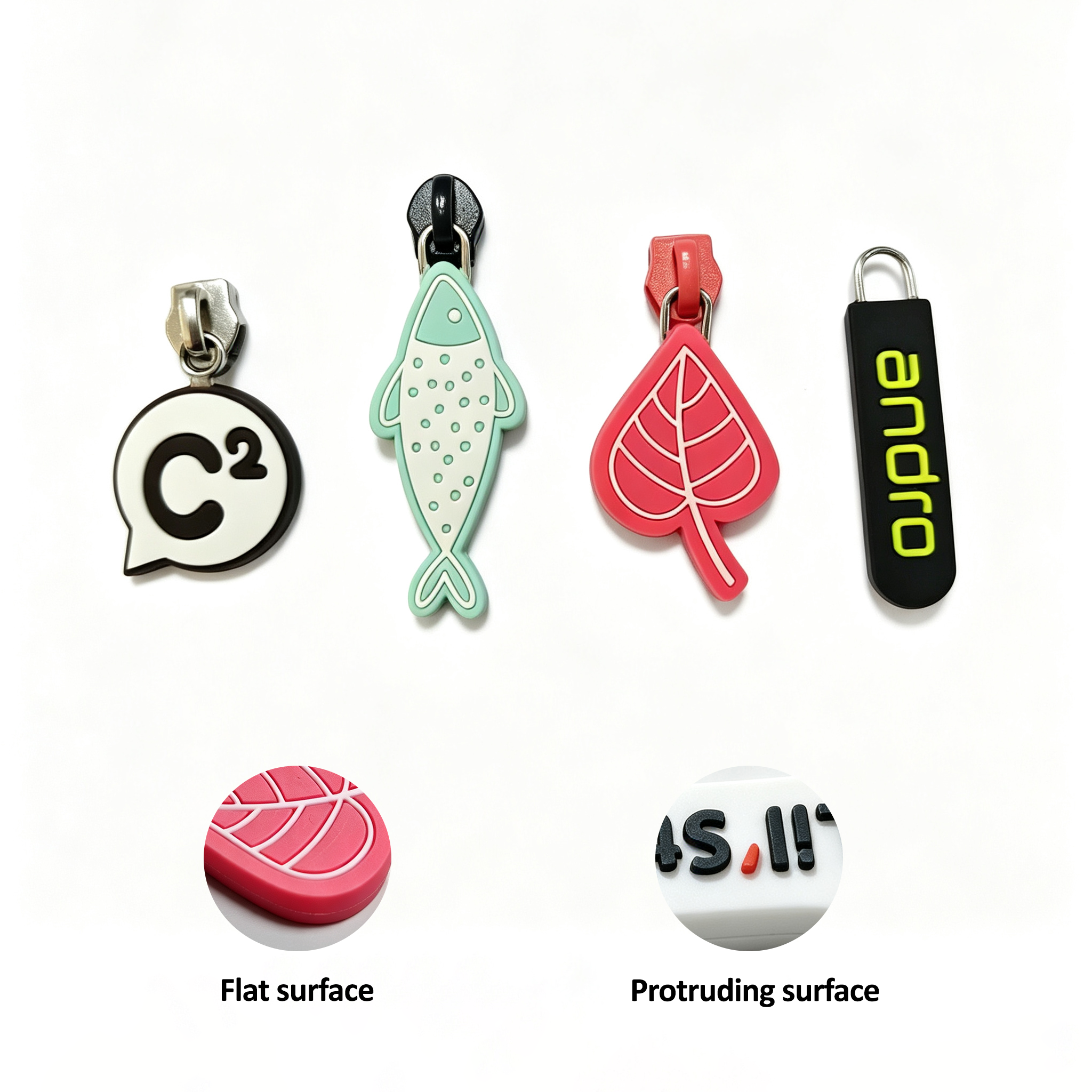
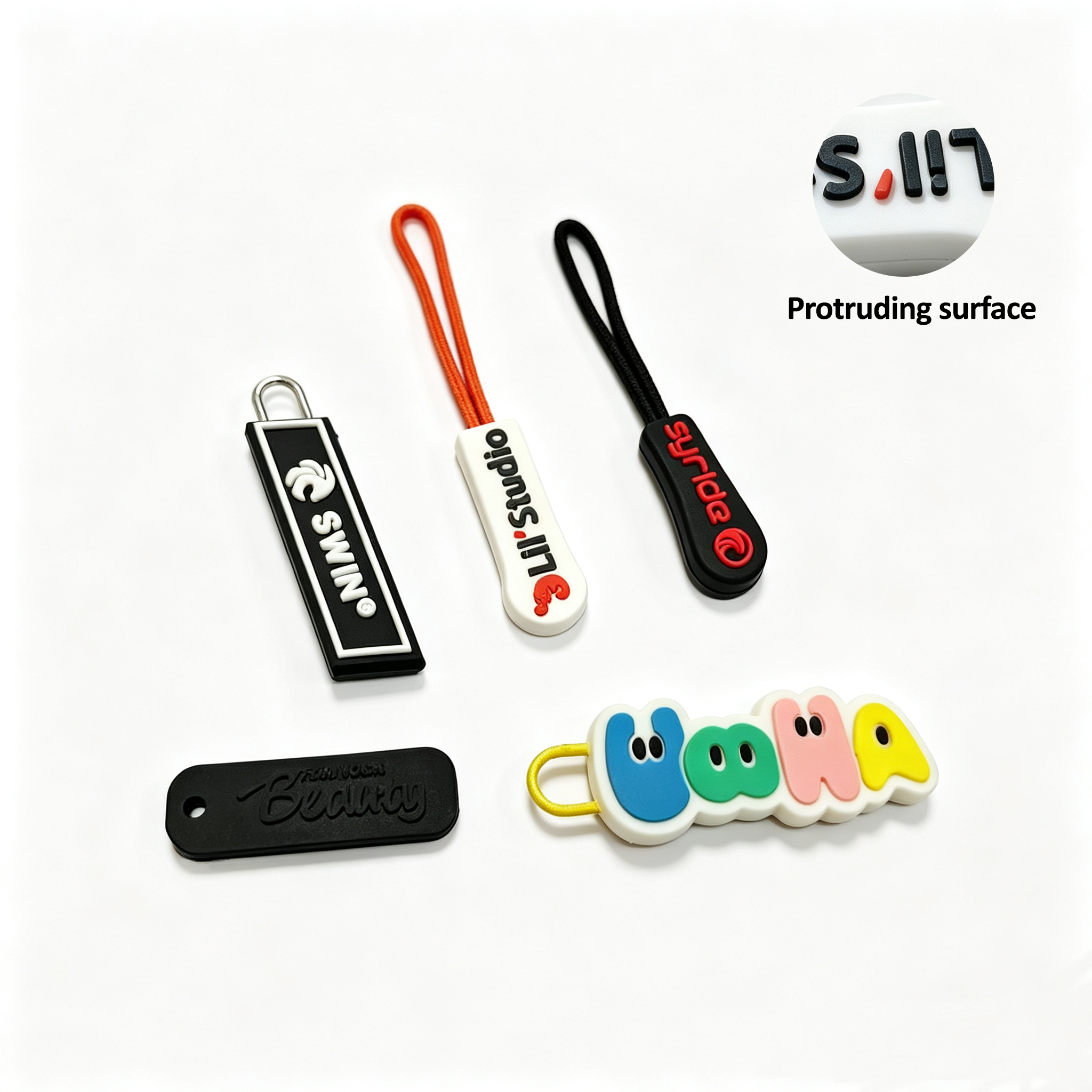
The second structure is raised detail. I use it when a brand wants a stronger 3D look. A mascot, cartoon shape, sports logo, or IP collaboration often looks better with raised areas. This structure can show several color zones. It gives more visual impact. It also needs better engineering because small raised lines can collapse or look uneven if the artwork is too fine.
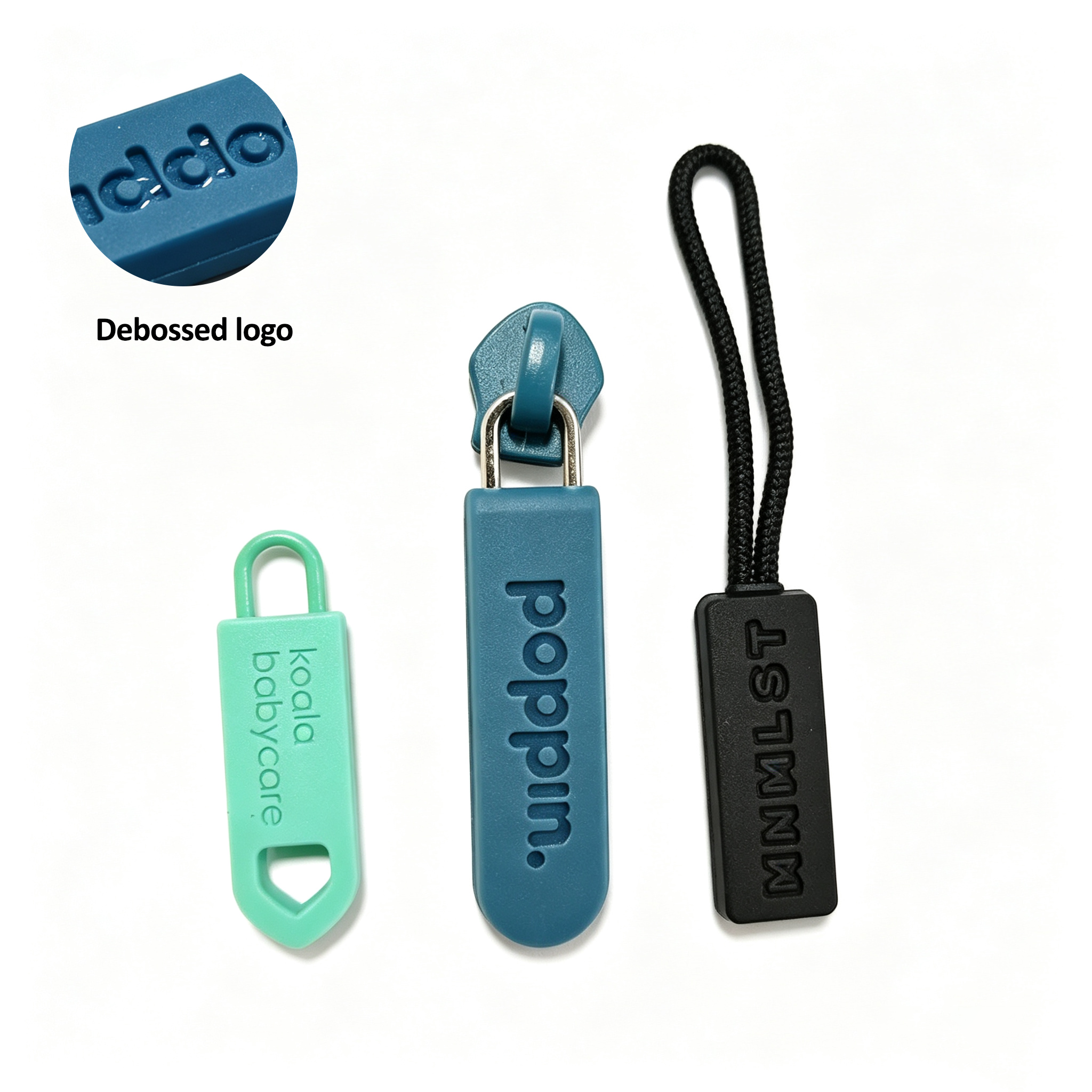
The third structure is debossed detail. I use it for a quiet and minimal look. The logo sits below the surface. This style is usually single color because the recessed zone is not friendly to complex color filling. It can be a good choice for understated branding, but I do not recommend it when the buyer expects bright multi-color detail.
| Structure | Best For | Production Note |
|---|---|---|
| Flat color separation | Standard logos and multi-color brand marks | Selection depends directly on your specific product application and design requirements. |
| Raised | 3D effects, mascots, kids’ products, and IP designs | I check line width before mold opening. |
| Debossed | Minimal logos and single-color premium looks | I avoid it for complex color separation. |
One rule matters more than many buyers expect. PVC cannot create a true gradient. I can make solid color blocks. I can use close color steps if the design allows it. I cannot make the same smooth fade that a digital print shows on a screen. When a brand sends gradient artwork, I ask the design team to convert it into clear solid color zones before sampling.
How Do I Control MOQ, Mold Cost, and Unit Price?
I often hear one question first: what is your MOQ? I understand the question, but I also know it is incomplete.
PVC puller MOQ depends on design complexity, color count, mold structure, size, and production efficiency. A simple single-color puller can be more flexible, while a detailed multi-color puller needs a higher order quantity.
MOQ is not only a sales rule. It is a production rule. A drip-molded PVC puller needs mold setup, color preparation, manual or semi-automatic filling steps, drying time, trimming, inspection, and packing. If a puller has five colors, the production team must manage five color materials and more process steps. If the design has fine separated lines, the rejection risk also goes up. I price and plan MOQ based on these real factory conditions.
The cost drivers I check before quoting
- I check the total size, because a larger puller uses more material and may need a stronger insert.
- I check the number of colors, because each color adds handling time and process control.
- I check the surface structure, because raised and detailed structures need more careful mold.
- I check the attachment method, because rope, metal, or open-hole designs each need a different strength plan.
- I check the order mix, because many small SKU runs can reduce line efficiency.
I also tell buyers to separate mold cost from unit cost when they compare suppliers. A very low sample or mold quote can hide weak engineering. A very low unit price can hide lower material control or poor final inspection. I do not think buyers need the highest price. I think buyers need a quote that matches the real product risk.
| Design Type | MOQ Tendency | Reason |
|---|---|---|
| Single-color simple logo | More flexible | The process is simpler and faster. |
| Multi-color flat logo | Medium | Color filling and inspection take more time. |
| Raised character or IP shape | Higher | The mold and color zones need more control. |
What Compliance Limits Should I Check Before Using PVC?
I prefer to discuss compliance before design approval because a nice puller is useless if it cannot enter the target market.
Eco-friendly PVC can meet many mainstream tests, including REACH, CPSIA, California Proposition 65, and phthalates requirements. However, PVC cannot pass BPA-free requirements by material nature, so buyers with BPA-free or No PVC policies should choose TPU or silicone instead.
For many apparel and bag programs shipped to the United States and Europe, I can work with environmentally controlled PVC that supports common export requirements. I still need the buyer to tell me the exact market and testing standard. A general statement like “we need eco material” is not enough for safe production. I need to know if the program needs REACH, CPSIA, California Proposition 65, phthalates, RoHS, or other buyer-specific restricted substance lists. Large retailers often have their own rules, and those rules can be stricter than national rules.
| Requirement | PVC Status | My Advice |
|---|---|---|
| REACH | Can be supported with controlled PVC | I confirm the latest substance list before orders. |
| CPSIA | Can be supported for suitable programs | I check child-use category details. |
| California Proposition 65 | Can be supported with proper formulation | I review customer warning and testing needs. |
| BPA-free | Not suitable for PVC | I switch to TPU or silicone at the start. |
I also explain the weathering limit clearly. PVC does not usually fail by simple color fading in normal use, but long exposure to strong UV light or extreme heat can create aging problems. The surface can become oily or sticky over time. This matters for heavy outdoor gear, long-life travel products, and high-end durability programs. If the product will sit under sun, heat, sweat, and rough outdoor use for long periods, I will usually discuss TPU, silicone, metal, or hybrid structures. This honest conversation protects both the buyer and the end user.
How Do I Prevent PVC Pullers from Breaking or Pulling Off?
I know why buyers worry about puller strength. A broken puller creates a complaint even when the zipper teeth still work.
To prevent pull-off failure, I use the right attachment structure, enough embedded length, and overmolding when rope or metal parts are involved. Strength must be designed into the mold, not fixed after production.
PVC pullers usually come in several forms. A pure PVC puller can have a hole and connect directly to the slider. A PVC tag can hang as a label-style pull. A rope plus PVC puller gives a softer hand feel and more length. A metal plus PVC puller gives a stronger and more premium structure. Each option has a different stress point. I do not choose the form only by appearance. I also check the product weight and how the end user will pull the zipper.
Why overmolding matters
For composite pullers, I use overmolding. This means the rope or metal piece is placed into the mold before the PVC material forms around it. It is not glued on later. This detail matters. Glue can fail with time, heat, and repeated pulling. Overmolding builds the connection into the body of the puller. It gives a cleaner look and a stronger bond.
| Puller Type | Best Use | Strength Note |
|---|---|---|
| Pure PVC puller with hole | Light bags, apparel, small cases | I keep enough material around the hole. |
| PVC tag puller | Brand labels and visual decoration | I avoid thin neck areas. |
| Rope plus PVC puller | Sports bags, backpacks, casual bags | I embed the rope during molding. |
| Metal plus PVC puller | Luggage, heavier bags, premium accessories | I increase the embedded metal length when higher pull force is required (as below picture). |
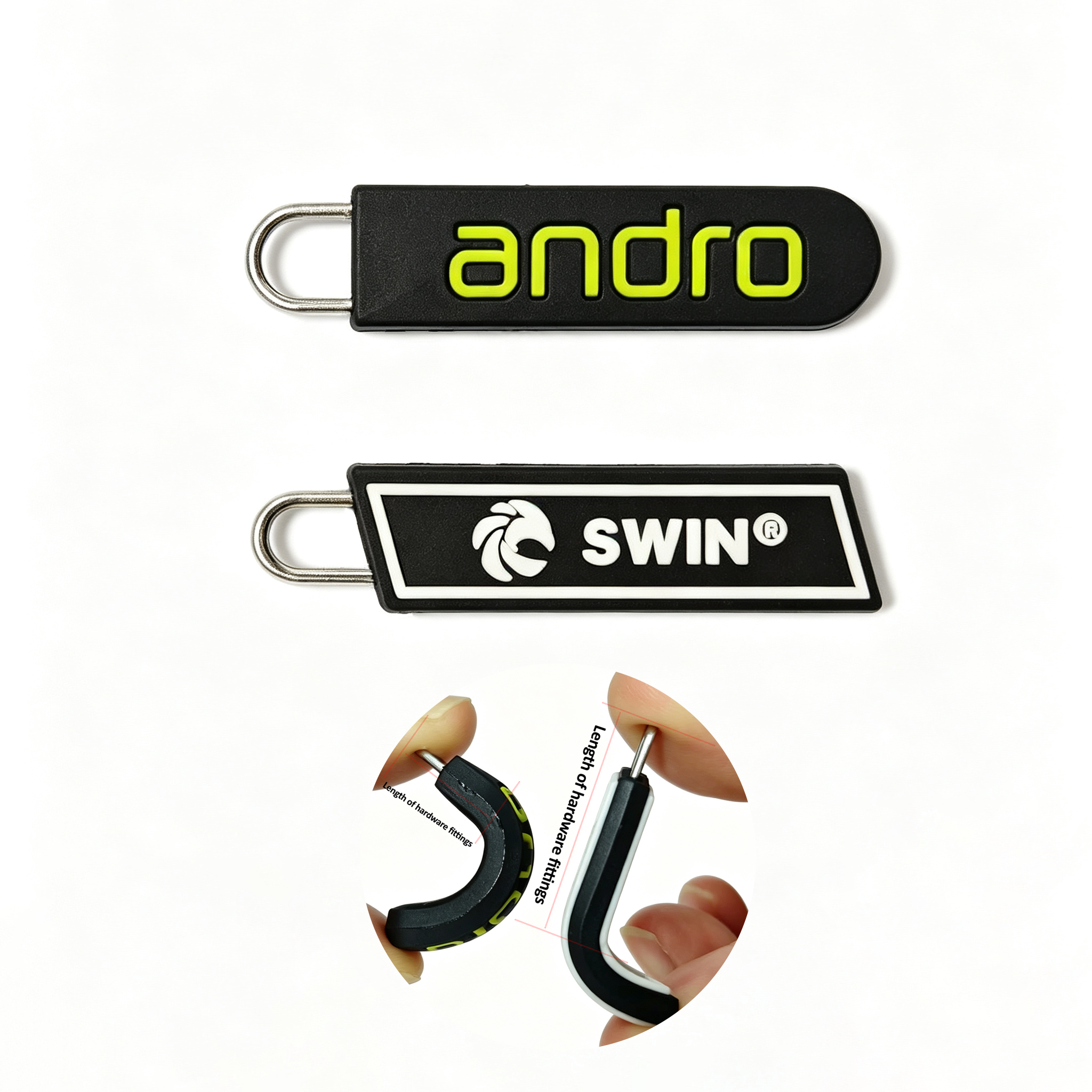
For heavy luggage or bags that carry more load, I do not rely on a standard insert length. I review the mold layout and increase the length of the metal part inside the PVC body when needed. This is a simple idea, but it changes the failure risk. A longer embedded part spreads the pulling force across more material. It makes the puller more stable under repeated use.
What Is the Right Sampling Process for Custom PVC Pullers?
I see the same costly mistake again and again. A team approves a drawing too fast, and the mold becomes the problem.
The best sampling process starts before mold opening. I ask for a 2D file, exact dimensions, Pantone colors, application details, and attachment requirements. Then I optimize the artwork for real PVC molding before the customer approves the final mold drawing.
A 2D logo file is not always a production drawing. A logo can have tiny lines, sharp corners, gradients, shadow effects, or narrow gaps. These details can look perfect on a screen and fail in drip molding. My engineering team reviews the drawing and adjusts the structure. I may thicken a line. I may simplify a color zone. I may change a sharp corner into a radius. I may move the hole or insert point to improve strength. I always want the buyer to approve these changes before mold work starts.
The process I recommend
- I receive the 2D artwork, size, Pantone colors, and target product information.
- I review the design for molding limits, color separation, line width, and pulling strength.
- I send an optimized production drawing with the workable details marked clearly.
- I open the mold only after the customer confirms the optimized drawing.
- I produce samples, inspect size and color, and review fit with the final zipper slider.
This front-loaded process saves time. Once the mold is made, a design change can make the mold useless. That means a new cost and a new schedule. I prefer to spend more time on drawing review because it protects the buyer’s launch calendar. It also protects the quality of the bulk order.
How Should I Send an RFQ for a PVC Logo Puller?
A vague RFQ creates a vague quote. I have learned that clear inputs give faster samples and fewer price changes.
For an accurate PVC zipper puller quote, I need artwork, dimensions, color references, quantity, target market, zipper application, attachment style, testing requirements, and packing needs. These details let me quote mold cost, unit price, lead time, and risk clearly.
I ask senior sourcing managers and designers to prepare the RFQ like a small technical package. It does not need to be complex. It needs to be clear. If the puller will be used on a number 5 nylon zipper for a light pouch, the strength plan is different from a puller used on a number 10 zipper for luggage. If the product will ship to the EU and the US, I need to know the test target early. If the brand has a No PVC rule, I need to know before I quote PVC.
| RFQ Item | What I Need |
|---|---|
| Artwork | AI, PDF, SVG, or clear 2D file with logo details. |
| Size | Length, width, thickness, hole size, or insert position. |
| Colors | Pantone numbers or approved physical color standard. |
| Use case | Apparel, handbag, backpack, luggage, pouch, children’s item, or gift item. |
| Quantity | Sample quantity and bulk order forecast by SKU. |
| Compliance | Target market, brand chemical standard, and required test reports. |
I also recommend that buyers ask for the zipper and puller together when possible. A puller can look correct by itself and still feel wrong on the slider. At RHF, I support full zipper manufacturing and custom puller development, so I can check the slider, pull tab, tape, teeth, plating, and final assembly as one system. This matters when a brand wants smooth operation and fewer complaints in the market.
If you want to review more zipper puller styles before building your own design, I suggest starting from our product page here: custom zipper puller products.
Conclusion
I treat PVC pullers as small engineered brand parts. The best result comes from clear artwork, honest material review, strong structure, and early sampling control. If you are ready to start, contact us for a custom consultation today.